

Somewhere in the middle of my second deck project, I learned what nobody puts on the box of a pair of ear muffs. The number printed in bold is a laboratory number. The comfort rating, the one that decides whether you actually wear the thing for the whole job, is the number that matters. And you only find that number out by strapping them on for an afternoon.
I bought the Pro For Sho 34dB NRR ear muffs about a year ago, after my old pair finally gave up and I stood in the hardware aisle squinting at a wall of orange and green plastic. I have used them on deck boards, shelving, trim, and a bathroom refresh that involved a lot more cutting than I planned. This is the honest review I wished I had read before I bought them.
The Quick Verdict
Solid, comfortable passive ear muffs that do what they claim. The real-world noise reduction lands a little below the sticker, and the band pressure is real, but for weekend DIY work these are the pair that actually stay on.
Amazon Check Today's Price →The ear muffs that stayed on through a full year of projects
After a year of deck boards, shelving, and a bathroom refresh, the Pro For Sho 34dB pair is the one I reach for. See today's price on Amazon and read my honest notes before you decide.
Amazon Check Today's Price on Amazon →How I've Used It
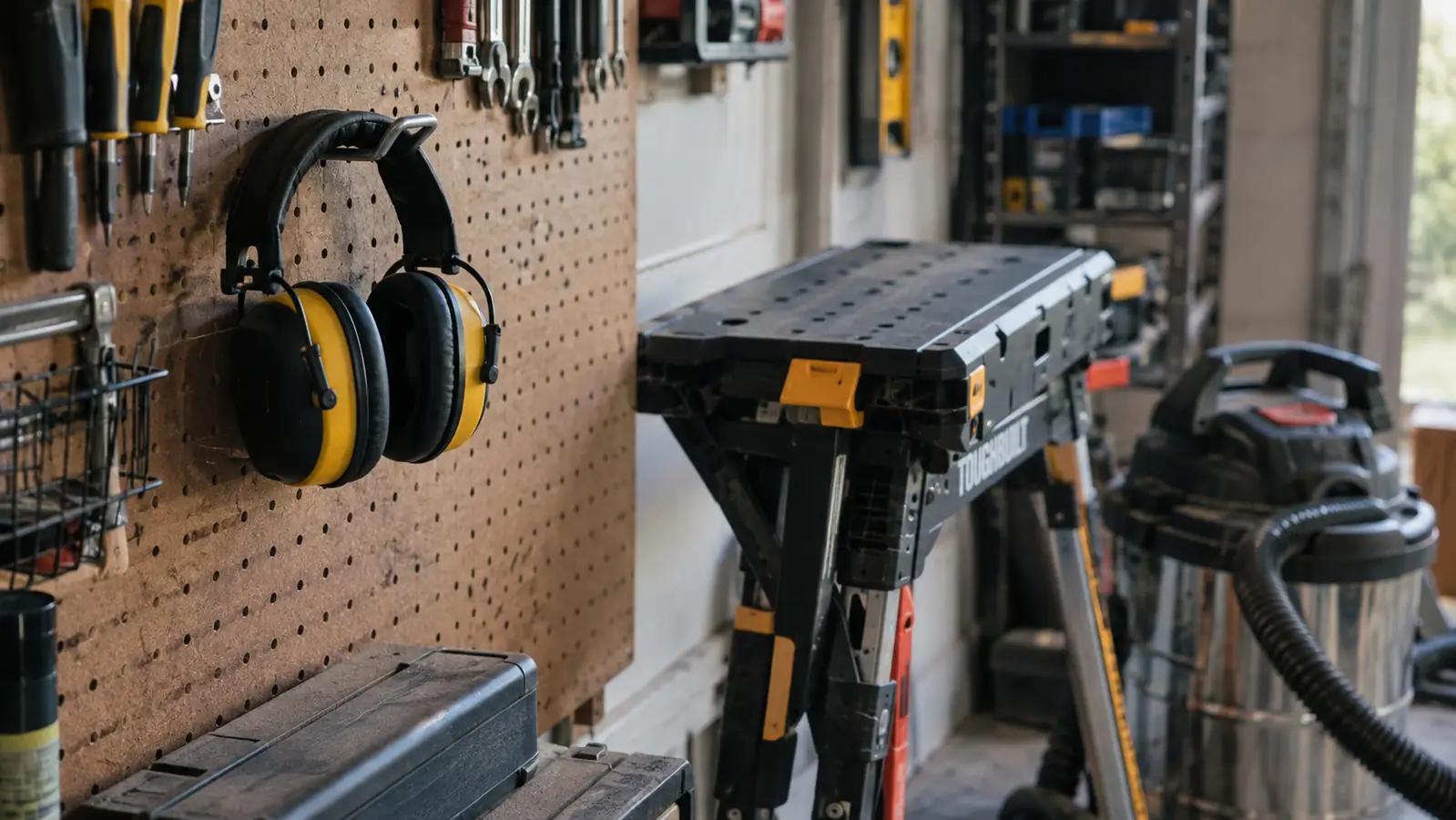
I am not a contractor. I am a 58-year-old grandmother who took over the tool side of the house a few years ago and figured out most of it the hard way. My workshop is one side of my two-car garage outside Spokane, with a pegboard wall, a folding workbench, and a shop vac that has seen better days. The ear muffs live on a pegboard hook, which turns out to matter.
When I test something for a review like this, I try to use it the way you would. That means the ear muffs came to work with me for a full year of projects. New deck boards on the back porch. Shelving in the garage. Trim in the hallway. A bathroom refresh that my daughter-in-law still brings up with a specific kind of fondness. Each of those jobs meant hours with a circular saw or a jigsaw, and each one gave me a chance to notice what the ear muffs did well and what they did not.
The honest version of a product test is not a single afternoon with a sound meter. It is the second Tuesday of a long project, when your shoulders are tired and the saw is loud and you have to decide whether the ear muffs go back on or whether you just finish the cut and be done. That is where most hearing protection fails, and it is where these have not failed me.
What the 34dB Rating Really Means
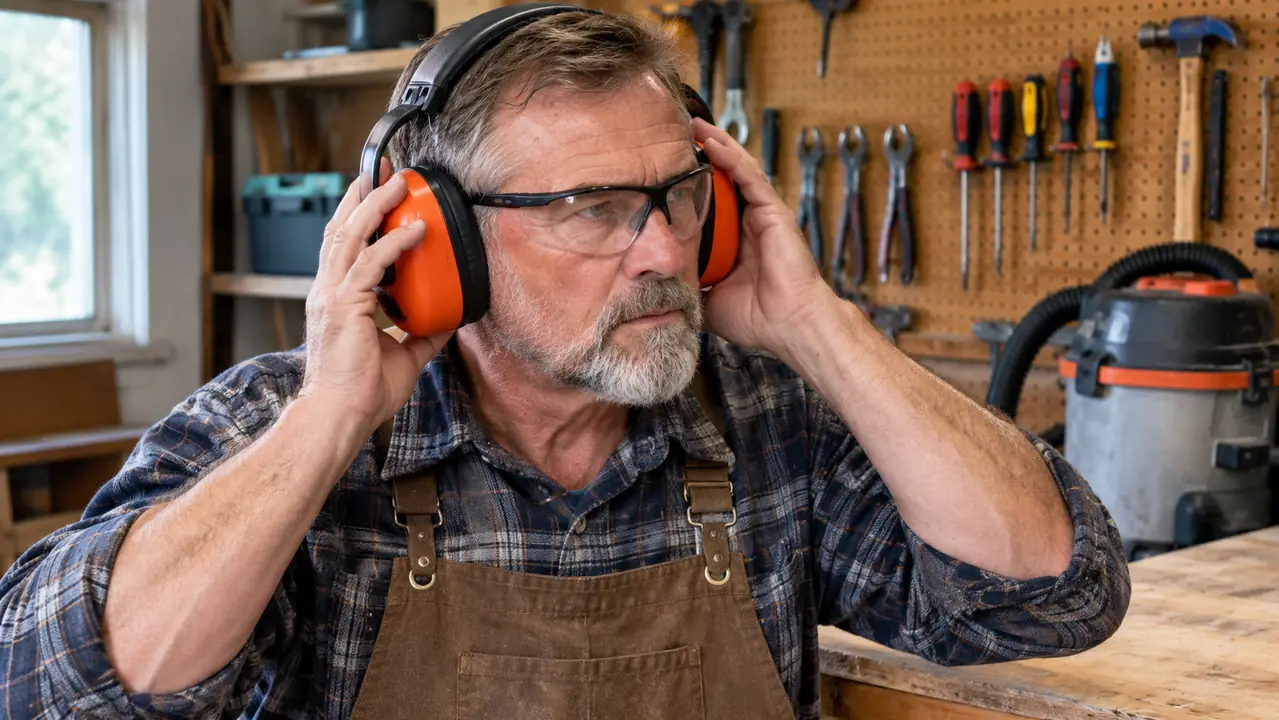
Here is what nobody tells you. The 34dB NRR number on the box is measured in a laboratory with the ear muffs fitted to a head form, in perfect conditions, with the band adjusted exactly right. Real life is not that clean. Your head is not a head form. Your hair gets in the way. The band slips when you lean over the saw. So the real-world reduction is lower than the sticker, sometimes noticeably lower.
That does not mean the number is a lie. It means you should read it as a ceiling, not a guarantee. For my purposes, cutting wood with a circular saw, the Pro For Sho muffs cut the worst of the bite. The saw still makes noise. You still know it is running. But the sharp edge, the part that makes your ears ring at the end of the day, is gone. That is the part that matters.
The other thing the box does not tell you: 34dB is a passive rating. There is no electronics in these, no battery, no switch. Some people expect ear muffs to work like headphones and are disappointed. These are simple. They are a padded cup, a steel band, and nothing else. Simple is a feature when you have ever stood in a garage with dead batteries and a saw that needs cutting.
What Nobody Tells You About the Fit
The fit is the real story, and it is a mixed one. The band clamps firmly. That is what creates the seal, and the seal is what creates the noise reduction. But firm clamping means pressure on the sides of your head, and after about forty minutes I notice it. Not pain. Just a reminder that they are there. I take them off during a water break, shake my head, and put them back on. That works fine.
If you wear glasses, listen. The cups press the arms of your glasses against your head. With thin metal frames you will barely feel it. With thick plastic frames, the pressure builds. I wear cheap readers and safety glasses over them, and after a long cut I feel the hinge area. It is not a dealbreaker. But if you have a thick frame you love, try them on before you buy.
The band is sized for an average adult head. My head is on the smaller side, and the muffs fit fine, with the cups sitting level. A child would not get a good seal. The cups are roomy enough that my ears do not fold or rub, which was my biggest worry with cheap muffs. They also swivel a little, so the seal stays put when I tilt my head down to mark a cut.
The last fit detail is the one most reviews skip. These are not light. The weight is what makes them feel solid, and it is what makes your neck remember them after two hours. On the other hand, the extra weight is why the cups sit so flat against your head. There is a tradeoff in every pair of ear muffs. These chose solid over featherweight, and for saw work I think that is the right choice.
The First Time I Used Them
The first time I put these on was in the garage, right after I brought them home. I pressed the cups over my ears and turned on the shop vac just to see what would happen. The difference was immediate. The vacuum went from a roar to a hum, and I could hear my own breathing. That first impression, the quick drop in harshness, is the same impression you get every time you put them on.
The real first test was the deck boards. A circular saw through pressure-treated lumber is one of the louder sounds in a normal person's life, and it rings in a way that makes you want to stop and check your ears. With the Pro For Sho muffs on, the saw still had a voice, but it did not have teeth. I finished the whole row of cuts and did not once think about my ears. That is the memory that made me trust them.
A Year of Hard Use
After a year on the pegboard, the Pro For Sho muffs look used. The cups have a few scuffs from being dropped on the garage floor. The foam padding inside is still intact, which surprised me, because cheap foam usually crumbles by now. The band has not lost its tension. If anything, they clamp the same today as the day I bought them, which is what you want from a spring.
The hinge points, the little swivels where the cups attach to the band, are the part I expected to fail first. They have not. They still click into place and hold. I have dropped these onto concrete at least four times, including once off the workbench onto the shop vac. I do not recommend that. But they took it.
One honest maintenance note: the padding is not replaceable. When it eventually wears out, the whole pair goes. That is normal for muffs at this price. It is worth knowing before you buy, so you are not surprised in year three. For a weekend tool, I think that is a fair trade.
The Comfort Question, Honestly
I keep coming back to comfort because comfort is the whole product. A pair of ear muffs that is technically excellent but uncomfortable will end up hanging on the hook while you finish the cut without them. That is how hearing damage happens. Not from the one loud thing. From the thousand small times you decided not to bother.
The Pro For Sho pair is comfortable enough that I have never once finished a cut without them because they were bothering me. I have taken them off for a sip of water. I have taken them off to answer the phone. I have never taken them off because I could not stand them. For me, that is the test that matters.
On a hot day in the garage, your ears will sweat. That is physics, not a defect. The foam does not soak up the sweat badly, and the cups have a small vent that keeps the pressure from building up when the air gets warm. I mention it because some reviews act like ear muffs are supposed to be climate controlled. They are not. They are ear muffs.
I have never taken them off because I could not stand them. For me, that is the test that matters.
Alternatives I Considered
I compared these against foam earplugs and against a set of electronic muffs my son-in-law owns. The foam plugs are cheaper and they travel well, but they only work if you put them in right, and I could never get a consistent seal. The electronic muffs are wonderful for a shooting range, where you want to hear conversation between shots. For a circular saw that runs for an hour straight, the electronics add cost and batteries for no real benefit.
The Pro For Sho muffs sit in the middle, and the middle is where most weekend DIYers actually live. They are simpler than the electronics and more reliable than the plugs. They do not need batteries, they do not need to be rolled and inserted, and they do not get lost in the bottom of a tool bag. You put them on and they work.
What I Liked
- Comfortable enough to wear for a full afternoon of cutting
- Strong clamp keeps the cups sealed against your head
- Survived a year of drops and hard garage use
- No batteries, no electronics, nothing to fail
- Roomy cups that do not fold your ears
Where It Falls Short
- Band pressure is noticeable after about forty minutes
- Real-world noise reduction sits below the 34dB sticker
- Padding is not replaceable
- Glasses arms feel the pressure with thick frames
Who This Is For
Buy these if you are the person I was a year ago. You have a saw, you have a project, and you have a vague sense that you should protect your ears. You want something that goes on fast, works every time, and does not cost a fortune. You do not want to read a manual. You do not want batteries. You just want to cut the board and hear the birds afterward.
They are also a good fit if you wear them for shorter bursts. Thirty minutes of trimming, an hour of sanding, a Saturday morning of deck work. The pressure never becomes a real problem in that range. And if you are buying a gift for someone who is hard to shop for, a solid pair of ear muffs is the kind of practical present that actually gets used.
I have also used these on the small projects I build with my grandkids, the kind where we make something simple out of scrap wood. When I am supervising, I want them to see that hearing protection is just part of how you work, like safety glasses. The muffs fit the job, and they fit that lesson.
Who Should Skip It
Skip these if you wear ear protection for eight hours a day, five days a week. A professional framer or a full-time carpenter will want something with softer padding and a lighter band, and they will be right to spend more. This is a weekend tool, and it is priced and built like one.
Skip them if you need to hear voices or warning sounds around you. These are passive muffs. They block noise; they do not pipe in speech. On a job site with moving equipment, you want electronic muffs that let sound through when it matters. And if you wear very thick glasses frames all day, try before you buy. The pressure against the arms is real.
What I Would Change
No product is perfect, and it would be dishonest to pretend this one is. The first thing I would change is the pressure. I would shave a little clamp force off the band, even if it meant the seal was slightly less perfect. The tradeoff would be worth it for the extra twenty minutes of comfortable wear.
The second thing is the padding on the band itself. The top of the band is plain steel, and after a long day it presses on the top of my head. A thin foam strip there would cost almost nothing and would make a real difference. It is a small thing, but it is the kind of small thing you notice at hour three.
The third thing is a case. These come loose in a bag, and mine have the scuffs to prove it. I would gladly trade a little packaging for a simple drawstring pouch. The scuffs do not hurt anything, and the muffs still work, but a case would keep them cleaner and make them easier to grab on the way to a job.
The Bottom Line
So here is the honest bottom line. The Pro For Sho 34dB ear muffs will not make a loud saw quiet. Nothing will. They will take the sharp edge off, they will stay on your head through a full project, and they will still be working a year from now. For a weekend DIYer who wants hearing protection that actually gets worn, that is the whole job.
Buy them for the fit, keep them for the durability, and do not believe the sticker the way I almost did. The 34dB is a ceiling, not a promise. The real-world quiet they give you is still enough to protect your hearing if you wear them every time. And wearing them every time, that part is on you.
Still deciding? Here is my short answer
If you want a pair of passive ear muffs that are comfortable enough to wear and built to last through weekend projects, the Pro For Sho 34dB pair is the one I keep reaching for. Check today's price on Amazon before your next trip to the lumber yard.
Amazon Check Today's Price on Amazon →