For years I convinced myself foam earplugs were good enough when I ran my circular saw. Some days I rolled them too loose, shoved them in halfway, and stood there feeling protected while the noise did its damage. By the end of a long afternoon my ears would ring, and I told myself that was normal. Then last fall I hung a pair of Pro For Sho 34dB NRR ear muffs on the pegboard next to my workbench, and after a season of cutting deck boards, trim, and shelving, I can tell you exactly why muffs beat plugs for saw work. It's not close.
Before I get into the list, one honest note: earplugs are not bad. They have their place. I still reach for foam plugs when I'm lying on my back under the bathroom sink or when I'm wearing a hard hat in someone else's attic. But for everyday saw work at my own workbench, the muffs win, and these ten reasons are the why.
Your ears don't get a second chance. Don't learn that the hard way.
Pro For Sho makes a 34dB NRR passive earmuff that cuts the scream of a circular saw down to something your ears can handle for a full afternoon of work. No batteries, no settings, no learning curve. Just a padded pair of muffs that sit on the hook by your workbench and go on in two seconds. It's on Amazon and it's the first thing I'd buy before the next project.
Amazon Check Today's Price on Amazon →They're hanging where you reach, not buried in a bag
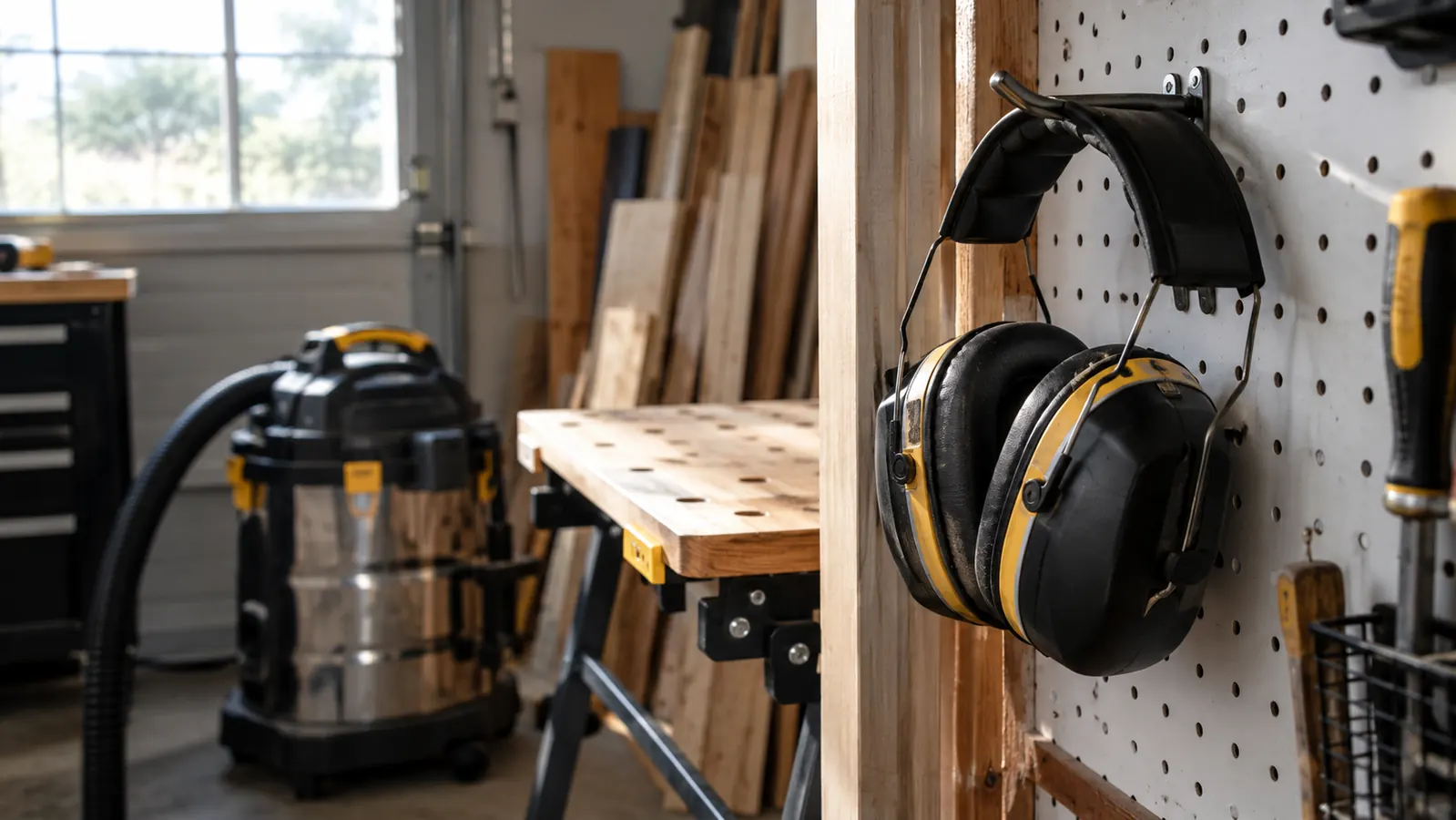
Foam plugs live at the bottom of my tool bag, usually wrapped in lint and one stray screw. To get to them I have to stop what I'm doing, dig around, and fish out the little plastic case. The Pro For Sho muffs hang on a pegboard hook right beside the workbench, within reach of the saw. When I need them, they're already where my hand goes. That doesn't sound like much, but it's the difference between wearing protection and telling yourself you'll grab a pair in a second, which is how ears get hurt.
The fit is the same every single time
Foam plugs depend on how well you roll them and how deep you seat them. Roll them thin enough, slide them in, and hold them while they expand, and they're fine. Do it in a hurry, and you've got one ear plugged and one ear guessing, which gives you a false sense of quiet. The Pro For Sho muffs have an adjustable padded band that sits the same way every single time you put them on. No technique required, no guesswork, no 'did I get that one deep enough?'
No more tiny cylinders for tired fingers
Rolling foam plugs down to the right size takes finger dexterity. I'm 58, I've got a touch of arthritis in my thumbs, and some days that little roll-and-insert dance is just not happening before I get impatient and skip it altogether. Muffs are a grab, a lift, and a click. If your hands are stiff from a morning of wrenching or carrying lumber, that ease matters more than you'd think. I didn't buy them for my hands. I bought them because I was tired of skipping ear protection. The hands are just why I actually reach for these.
They quiet the saw, not the conversation
This is the part nobody tells you about foam plugs. They block noise by filling your ear canal, and they also block the sounds you actually want to hear. Muffs sit on the outside of your head, so the harsh high-frequency scream of the saw gets knocked down while lower sounds still come through. I can hear my shop vac running, I can hear the doorbell, and I can hear my grandson shout from the driveway when he shows up to help, which is exactly what I want from protection.
On and off between cuts without starting over
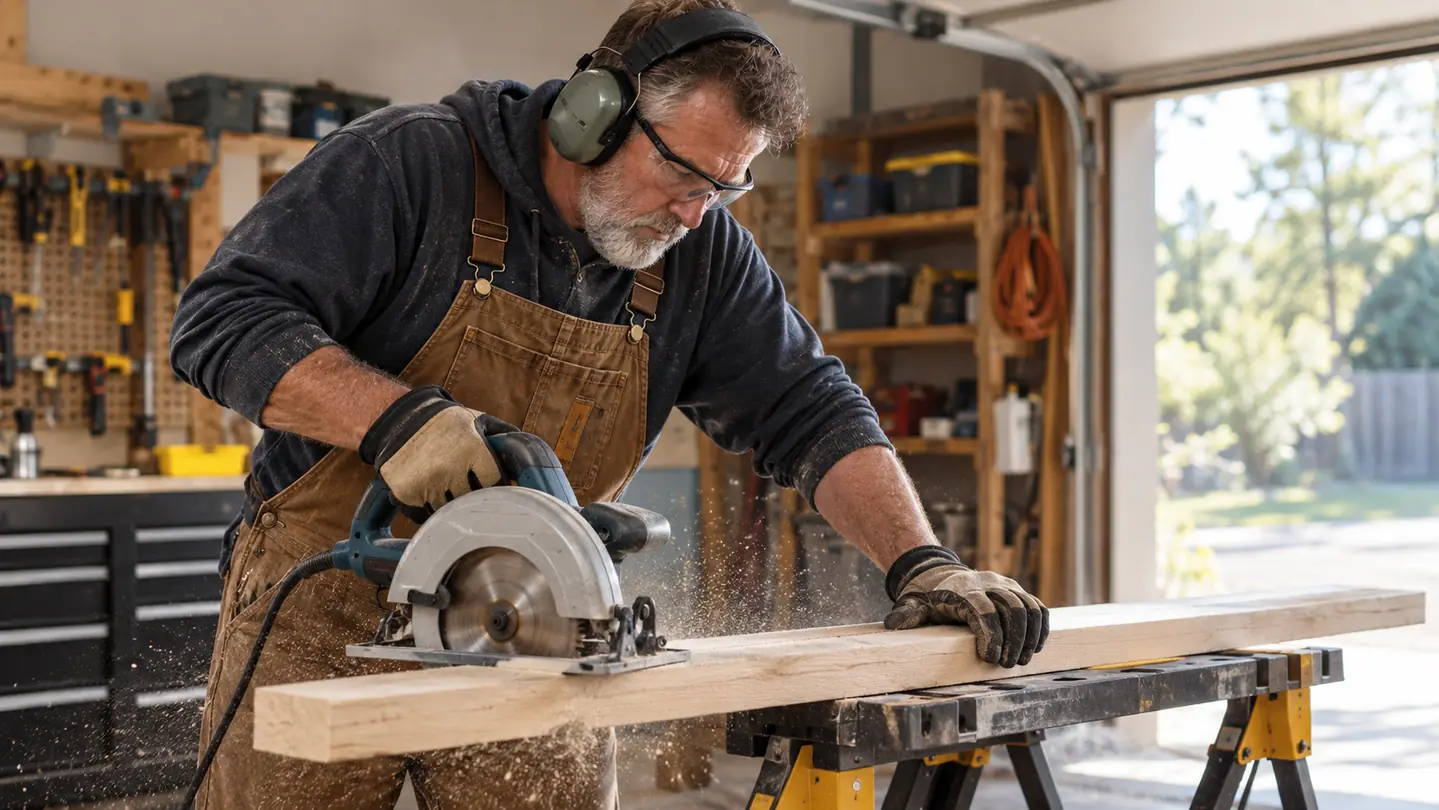
Foam plugs are a commitment. Take them out to answer the phone or move a ladder and you're rolling them back down and waiting for them to expand again before you can get back to work. Muffs come off with one hand and go back on with one hand. Last spring I cut twelve deck boards in an afternoon, and between measuring, clamping, and moving lumber, I took the muffs off and put them back on at least twenty times without thinking about it once. I would not have done that with foam plugs.
They fit fine over my reading glasses
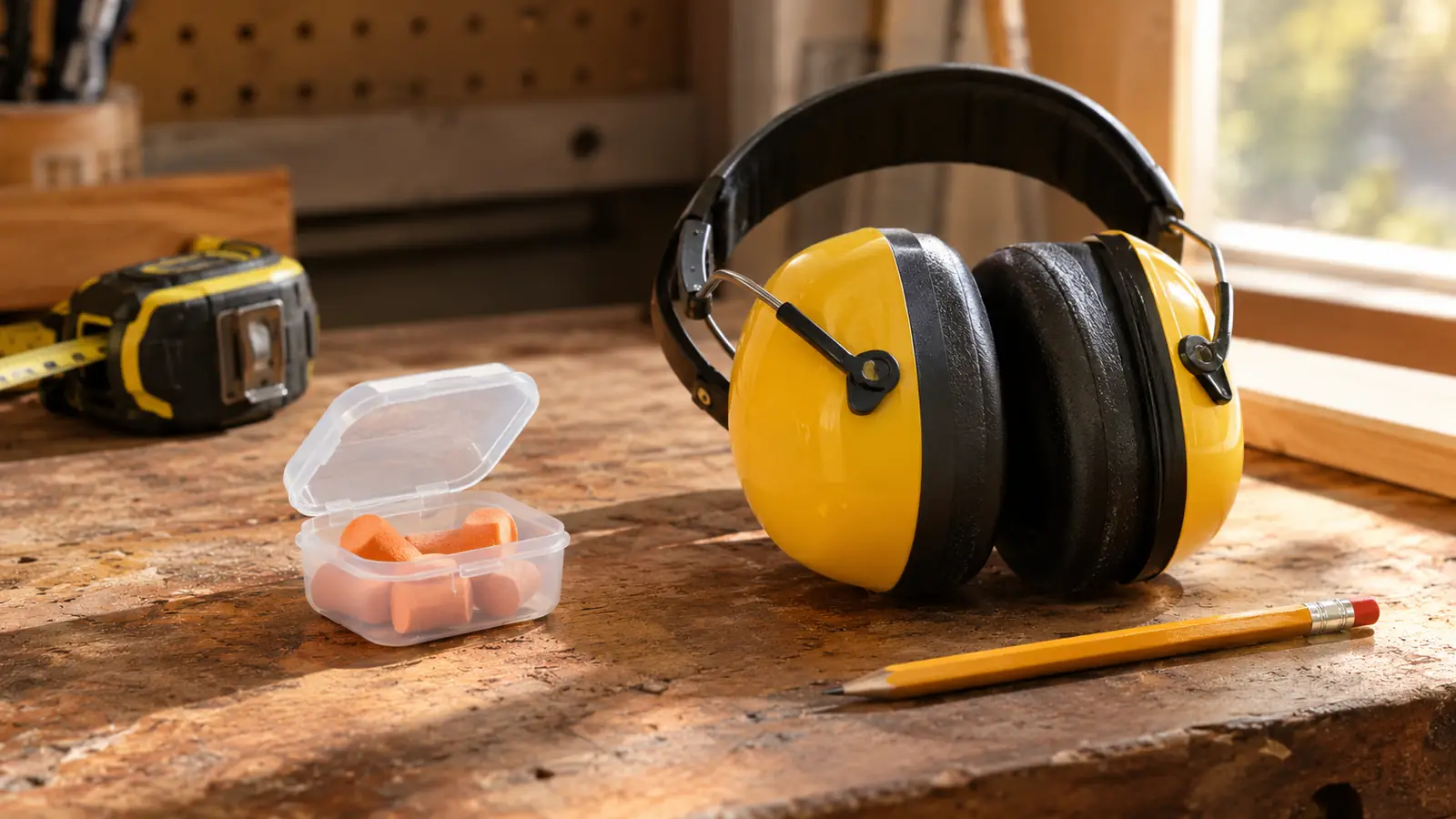
I wear reading glasses for close work, and foam plugs don't care about that one way or the other. But muffs from cheaper brands press the arms of your glasses into your temples until you get a headache by lunch. The Pro For Sho muffs have soft, deep cushions that clear my glasses without cranking down on my head. I wore them for a full afternoon of cutting and installing shelving and never once felt the ache I got from an old pair that shall remain nameless.
One size actually fits most adults
Foam plugs come in different sizes for different ear canals, and getting the wrong size means they either fall out or hurt after an hour. The band adjusts easily and the cups are big enough to cover most ears without pinching. I handed mine to a guy on my Tuesday bowling league, who has a head and a half bigger than mine, and he wore them for a full afternoon of helping me rip boards for the raised garden bed. Not one adjustment, not one complaint.
The 34dB rating is the number that counts
This is where I stop being folksy and get serious. A circular saw runs somewhere around 100 to 110 decibels, and repeated exposure at that level does permanent damage to your hearing, the kind that doesn't come back. The Pro For Sho muffs are rated 34dB NRR, which is at the top end of what passive muffs do, and taking 34dB off a 105dB saw puts you in a much safer range for an afternoon of work. My ears don't ring after I finish cutting. That is the entire point of buying them.
No batteries, no tips to replace, no upkeep
My old pair of electronic ear protection ran through batteries faster than I expected one winter, and the foam tips needed replacing every couple of months. The Pro For Sho muffs are dead simple passive protectors. Nothing to charge, nothing to swap, nothing to break. When they get dusty from sanding, I rinse them in the sink and hang them back up. For a weekend DIYer who wants a tool that's always ready to go, that simplicity is the feature.
They double as cold-weather gear in the garage
Spokane winters mean my garage hovers near freezing in January, and the metal handles of my tools get painfully cold. These muffs cover your ears all the way around, so they do double duty as warm gear while I'm cutting trim or breaking down boxes for the recycling run. That's not why I bought them, and I won't pretend it's a safety feature. But it's the bonus I noticed by the second week, and it's a real one.
What I'd Skip
If I'm being honest about fit, this is who should skip the Pro For Sho muffs. If you wear a hard hat or a welding hood for most of your workday, the band can fight with the straps, and foam plugs are the cleaner answer. If you spend your time horizontal, under a sink or under a car, muffs are just too bulky. And if you already own a pair of passive muffs you trust, this pair isn't going to change your life. But if you're a weekend saw user who currently stuffs foam in your ears and hopes it's enough, this is the first place I'd spend your money.
A circular saw runs 100 to 110 decibels. The Pro For Sho muffs take 34dB off that, and after an afternoon of cutting pressure-treated lumber, my ears don't ring. That's not a comfort feature. That's the point.
Your ears are the one tool you can't replace
You wouldn't run a saw without safety glasses, and you shouldn't run one without hearing protection either. The Pro For Sho muffs are rated 34dB NRR, they're simple enough that you'll actually use them, and they're on Amazon right now. Before your next project, do your ears a favor.
Amazon See the Pro For Sho Muffs on Amazon →