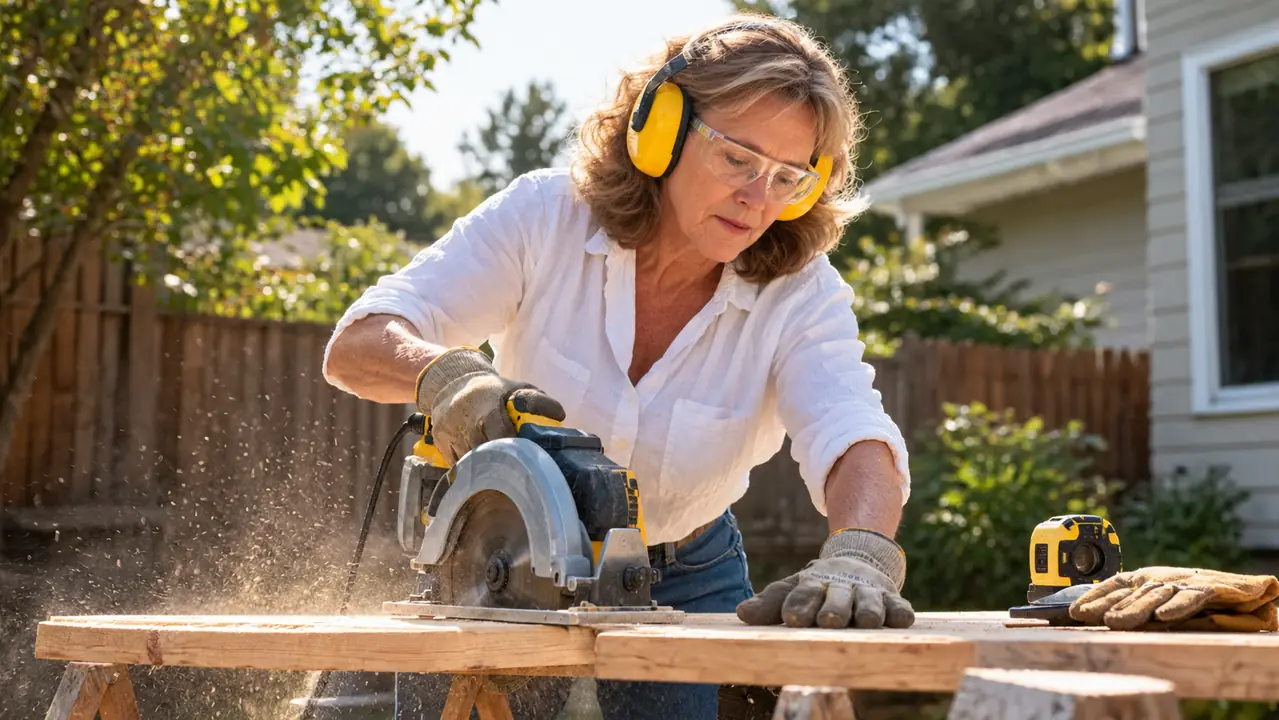
The first time I used a circular saw for real, I didn't wear hearing protection. I was in my twenties, cutting a sheet of plywood on sawhorses behind the house, and the noise just seemed like part of the job. Thirty years later, my ears ring a little when the house is quiet, and I've learned to treat loud tools the way I treat sharp blades. If a tool can hurt you, you respect it. So last spring, when I started replacing the deck boards on my back porch, I bought a pair of Pro For Sho ear muffs on a Tuesday afternoon and put them to work that same weekend.
The funny thing is, I almost didn't buy them. I stood in the aisle comparing a box of foam earplugs with the Pro For Sho muffs and did the math the way I do all math, which is to ask what's the least I can spend and still get the job done right. But I'd tried foam plugs before. They roll down to nothing, they work loose when I'm bent over a saw, and I could never tell if I'd seated them properly. So I went with the muffs. Months later, I'm still reaching for them, which is more than I can say for most of my impulse hardware purchases.
The Quick Verdict
Comfortable enough for a full morning of sawing, simple enough that I never think about them, and quiet enough that my ears don't ring when the saw stops. After months of deck work, trim, and shop vac noise, these are the pair I'd buy again.
Amazon Check Today's Price →The ear muffs I reach for every time the saw comes out
Months of deck boards, trim, and garden bed builds later, the Pro For Sho 34dB muffs are still hanging on my pegboard. Check today's price on Amazon and see why more than 27,000 owners gave them 4.5 stars.
Amazon Check Today's Price on Amazon →How I've Used It
Since last spring, these muffs have been on my head for three kinds of work. The biggest job was the deck. I cut and screwed down fourteen 12-foot boards over two weekends, which meant hours of circular saw work followed by hours with an impact driver. The saw is the loud one, but the driver gets old fast too, that high whine that finds the back of your skull. Then came a bathroom refresh in the fall, cutting trim with a miter saw and running a grinder over old caulk lines. Most recently, I used them for the raised garden bed I built for my grandkids, which involved a jigsaw, a drill, and a lot of patience.
The longest single stretch was about three hours on a Saturday morning, cutting deck boards in batches. That's the real test of an ear muff. Any pair can feel fine for ten minutes in the store. Three hours tells you whether the padding is actually padding and whether the headband is going to leave a tender spot behind your ears. These passed. I took them off twice to let my ears breathe, and both times it was because the morning was warm, not because they hurt.
I also wore them for jobs that aren't strictly construction. The shop vac in my garage is loud enough that I used to dread it. Now I slip the muffs on and it's just noise instead of a headache. Same with the lawn mower and the weed trimmer last summer. I can't measure 34dB at home, but I can tell you the difference between standing next to a running miter saw with these on and without. With them on, the saw sounds like it's in the next room, and when I take them off at the end of the day, my ears are quiet.
What the 34dB Rating Means, and What It Doesn't
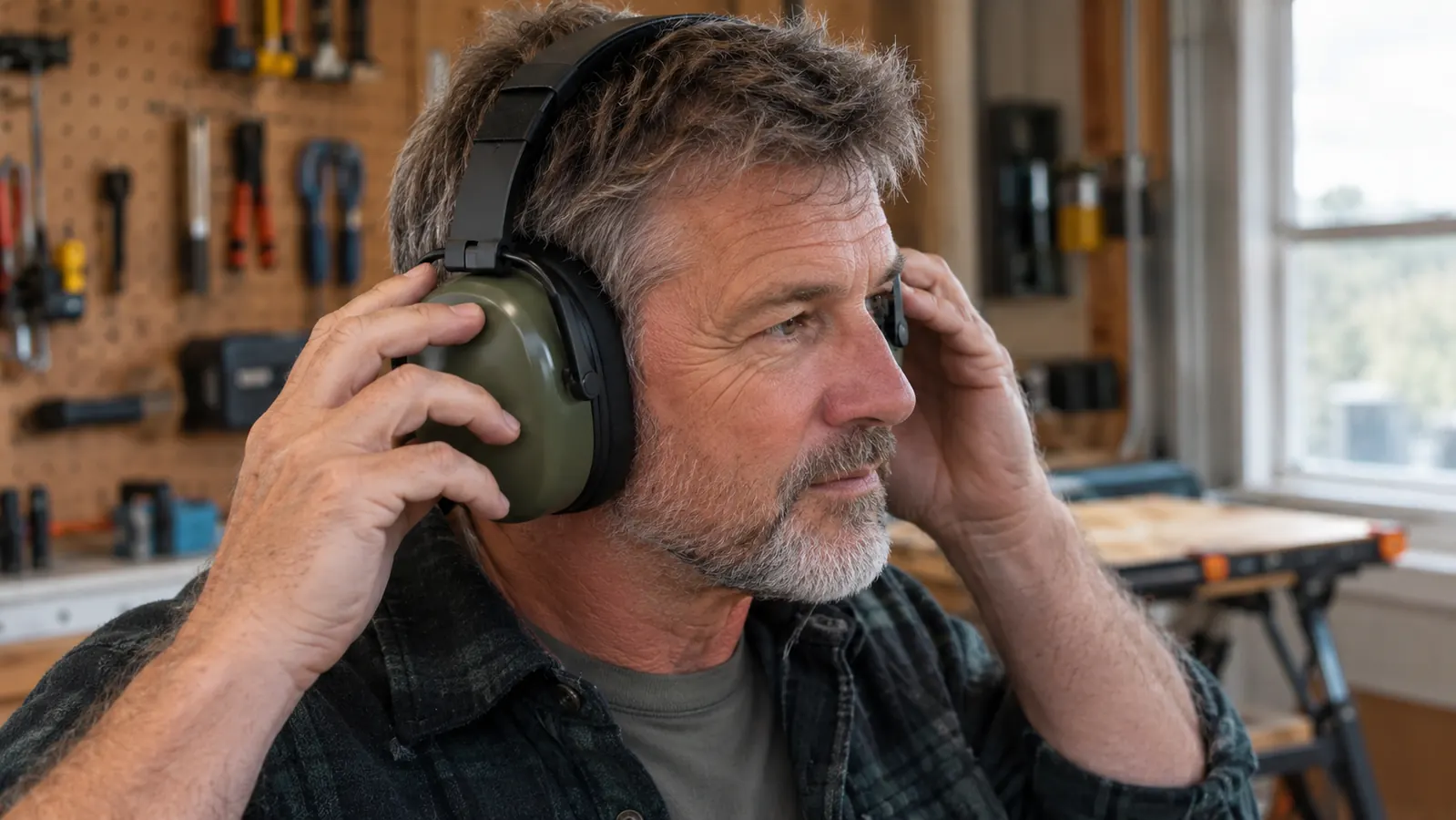
NRR stands for Noise Reduction Rating, and 34 is about as high as you'll see on a passive ear muff. Here's the honest version of what that number does for you. A circular saw runs somewhere around 100 to 110 decibels, and sustained exposure at that level is exactly how you end up with ringing ears at sixty. The rating on the box is measured in a lab with a perfect fit, so real world reduction is usually a little less. Even being conservative, you're bringing that saw down into a range your ears can handle for an afternoon.
What the rating doesn't tell you is the part that actually decides whether you'll wear them, which is comfort and fit. The most protective ear muff in the world is useless if it lives in a drawer. That's why I'm reviewing these after months instead of after one weekend. The rating got me to pick them off the shelf. The comfort is what kept them on my head.
If you're new to hearing protection, here's the short version of why this matters. Hearing damage doesn't hurt when it happens. It shows up years later as a constant ringing, or as the feeling that everyone around you is mumbling. My own ears ring a little at night, and I can trace it straight back to all the years I treated noise as part of the job. That's the thing I'd tell anyone younger than me: you don't get to feel the damage while you're earning it. You only get the bill later.
Comfort Is the Whole Ballgame
My head is on the smaller side, and a lot of hearing protection is built for bigger heads. The Pro For Sho muffs adjust with a simple slide on the headband, and they cinch down small enough that they don't slide around when I bend over to pick up a board. That matters more than you'd think. Ear muffs that shift when you move are ear muffs you're constantly fussing with, and fussing means you stop wearing them.
I also wear reading glasses for the fine work, and these muffs have enough room inside the cups that my glasses arms don't dig into my head. That was the surprise that sold me. I'd assumed I'd have to choose between hearing protection and being able to see the cut line. The padding is soft without being so plush that my ears sweat, and the headband doesn't press hard against the top of my head the way cheaper pairs do.
Between cuts, they sit flat around my neck, which is where they live for most of a project. I flip them down, take a sip of coffee, flip them back up. No adjusting, no re-seating. For a person whose hands are usually full of a board or a drill, that's the small thing that makes the whole pair worth it.
How They've Held Up Over Months
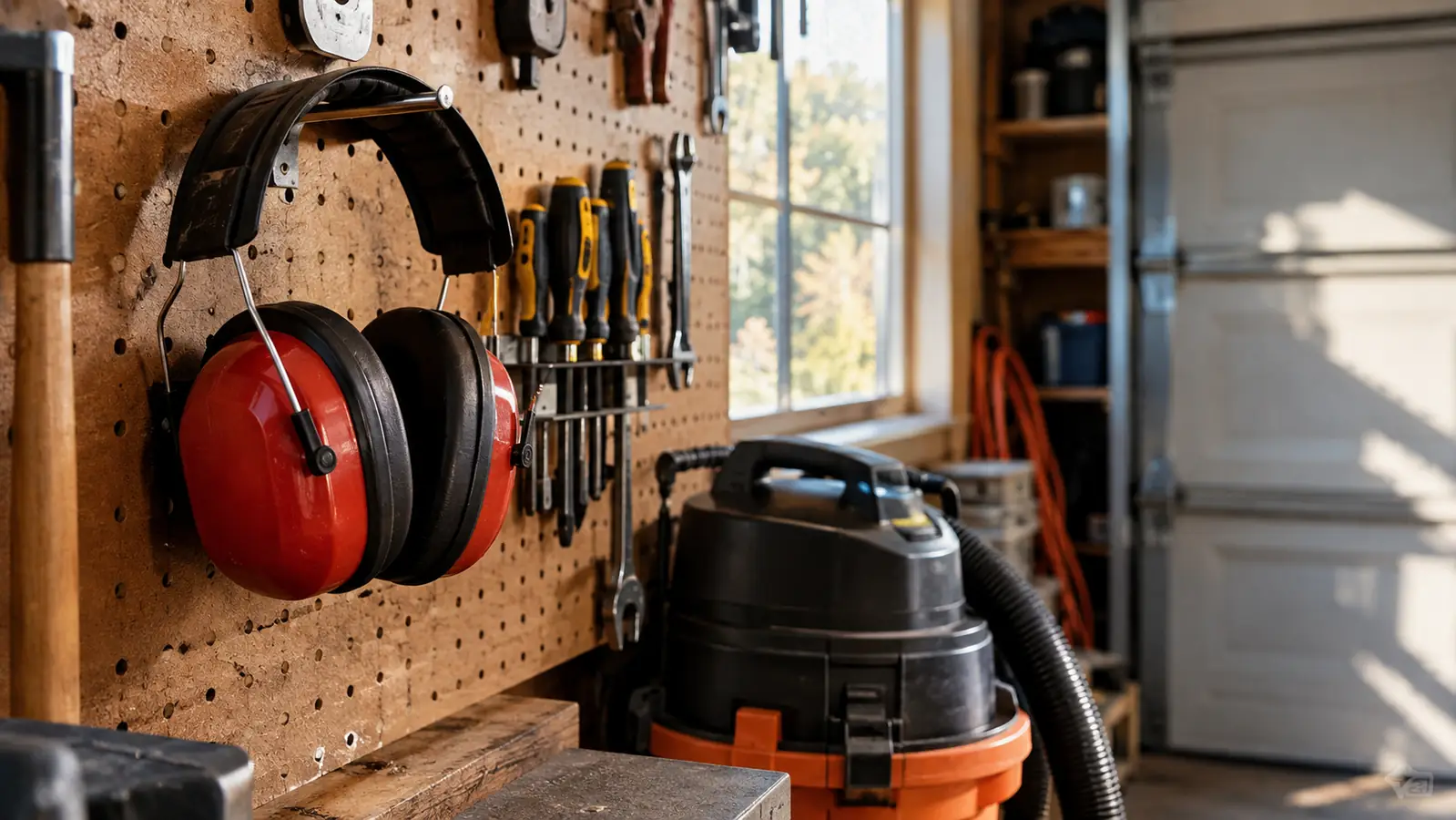
I'm hard on gear. My workshop is one side of a two-car garage, and at the end of a project, tools get tossed into a plastic bin or hung wherever there's a nail. These muffs have been dropped, knocked off the workbench, and left hanging on a pegboard hook through a Spokane winter. The foam still springs back. The headband still holds its tension. The padding hasn't flaked or split. The only wear I can find is a scuff on the outside of one cup, and I genuinely don't remember what put it there.
I've owned cheaper ear muffs where the foam inside the cups started crumbling within a year, which meant crumbs in my hair every time I put them on. That hasn't happened here. Aside from a layer of sawdust I should probably wipe off, they look about the same as the day I bought them.
Cleaning is easy too. The foam cups wipe down with a damp cloth, and the outer shells are smooth enough that sawdust doesn't stick. I gave mine a wipe after the deck project, and they looked ready for the next one.
What Nobody Tells You About Ear Muffs
They're bulky. There's no way around it. When I'm reaching into a tight cabinet or working under a sink, the cups catch on the cabinet frame, and I have to take them off or work with them tilted. For jobs like that, I keep a box of foam plugs in the garage and use the muffs for the open work where they shine.
They get warm. In the winter, that's almost a feature. On a hot July morning, you'll want breaks, and you should take them, because the point is to protect your ears, not to punish them. I cut my deck boards in the cool of the morning and did the afternoon work in shorter bursts.
And they don't block every sound, which is a good thing. I can still hear the saw, and I want to, because I need to know if the blade starts binding. I can hear someone talking if they're close and raise their voice. What I can't hear is the ringing after I'm done, and that's the part that matters. That's the whole review in one sentence.
They also set an example, if that matters to you. When the grandkids are over and I'm working in the garage, they watch me reach for the muffs before I start the saw. Kids learn from what they see, and seeing that loud tools come with ear protection is a better lesson than anything I could say about it.
Why I'd Choose These Over the Alternatives Again
The foam plugs I used to buy are cheaper, and I still keep a box on the shelf for the tight space jobs. But for saw work, the muffs win every time, because there's no technique to get wrong. You put them on, they cover your ears, done. I never have to wonder whether I rolled the plug small enough or whether it's going to work loose halfway through a cut.
I also looked hard at the electronic muffs with the speakers and the Bluetooth. They tempt me, I'll be honest. But for the work I do, I don't need to take calls or listen to music while I cut. I need quiet, and I need it to be simple, and I need it to work without charging or pairing or any of the other fuss. These are simple. That's not a criticism of the fancy ones. It's just a description of what I actually need.
There's also the matter of trust. Pro For Sho has been selling hearing protection long enough that I recognized the name from the hardware store, and with more than 27,000 reviews and a 4.5 star average on Amazon, I figured the odds were good that I wasn't buying a one-week wonder. So far, that bet has paid off.
What I Liked
- Comfortable for hours of continuous wear, even with reading glasses on
- Simple slide adjustment fits smaller heads without pinching or slipping
- Foam cups and headband have held up after months of regular use
- 34dB rating is plenty for saws, trimmers, and the shop vac
- No batteries, no pairing, no technique to get wrong
Where It Falls Short
- Cups are bulky and catch on cabinet frames in tight spaces
- Get warm on hot days, so you'll want breaks
- No electronics, so no Bluetooth or conversation mode
- Padding can soften if you leave them in a hot car
These are the first ear muffs I've owned that don't dig into my glasses arms. That one detail is why they hang on my pegboard instead of living in a drawer.
Who This Is For
If you're a weekend DIYer doing saw work around the house, these are worth a serious look. They're for the person who cuts deck boards, trim, and shelving in batches, who runs a shop vac and a miter saw and a weed trimmer, and who wants one pair of ear muffs that does all of it without fuss. They're especially good for people who've struggled with foam plugs, who wear glasses, or who have a smaller head and have found that most hearing protection swims on them. And if you're the kind of person who wants gear that just works, with no batteries to charge and no settings to fiddle with, these fit that bill exactly.
Who Should Skip It
If most of your work happens in tight spaces, under sinks, inside cabinets, or bent over a small repair where the cups would catch on everything, you'll probably be happier with foam plugs, and that's a perfectly honest answer. If you need to hear conversation while you work, or you want to take calls and listen to music on the job, the electronic muffs are a better fit, and I say that without any loyalty to what I bought. And if your projects are so rare that you reach for ear protection twice a year, a box of foam plugs will do the job for less. Buy the muffs because you'll actually wear them, not because they're the impressive option.
Months later, still the pair I reach for
If you're standing in the aisle trying to decide between plugs and muffs, this is the pair that ended the debate for me. Check today's price on Amazon and see if they earn a spot on your pegboard.
Amazon Check Today's Price on Amazon →