
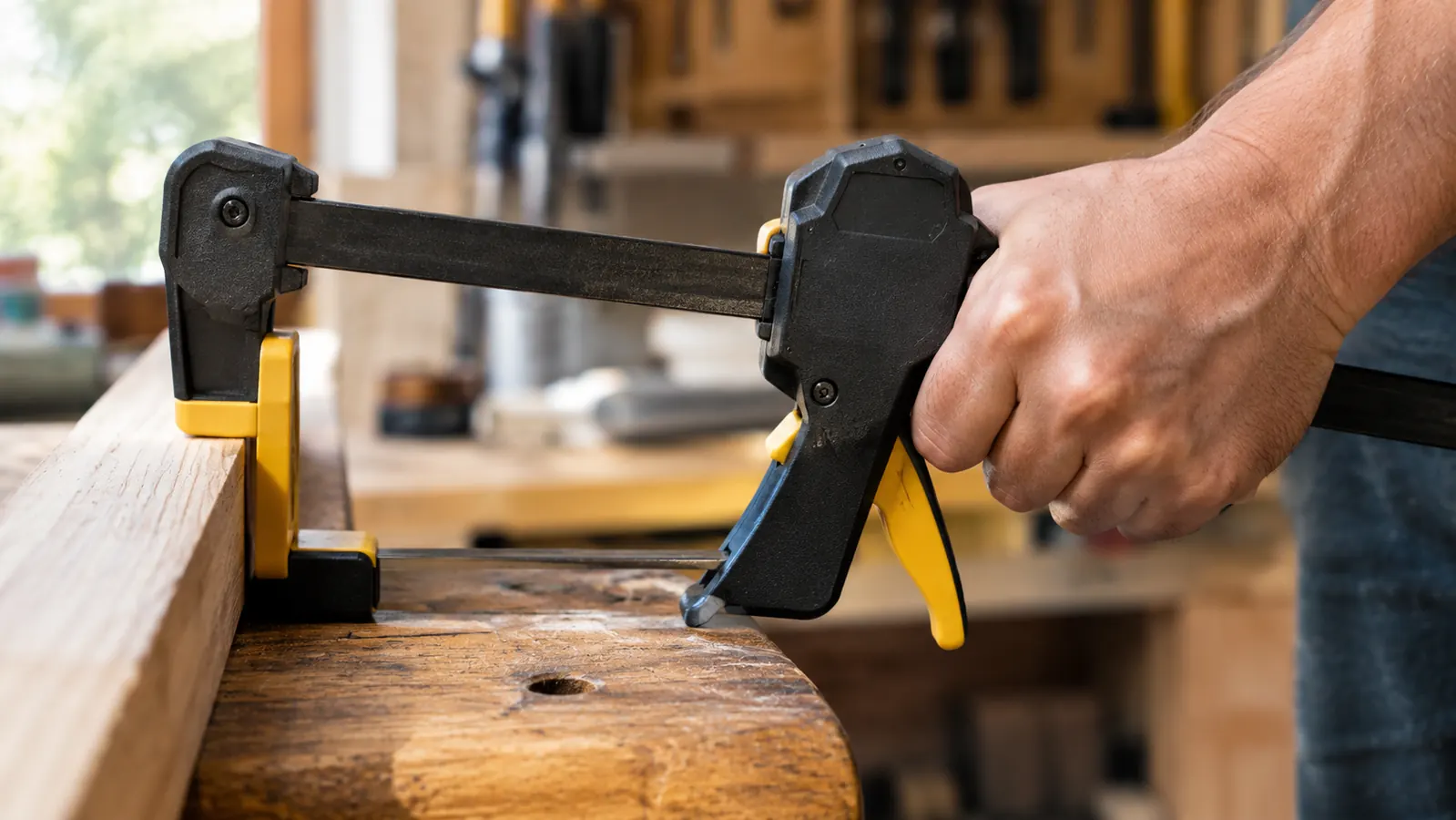
Clamps are one of those tools you don't think about until you're standing in the middle of your garage holding a piece of trim against a door frame with your hip, trying to get a screw started with one hand and keep a C-clamp from sliding off with the other. That was me two summers ago, on a Sunday afternoon, and it's the moment I finally ordered the IRWIN Quick-Grip one-handed mini bar clamps. They looked simple enough, even a little toy-like, but they turned out to be the most reliable tool I own. I'm a 58-year-old grandmother who has learned to fix things around the house on my own since my husband passed. I'm not a professional woodworker, and I don't pretend to be. I'm the person reading the label in the hardware aisle, trying to figure out which clamp will do the job without making me want to take an ibuprofen by the end of it. These clamps did that job for me.
Here's my short answer, because no one wants to read a rambling review without a bottom line. For the kind of work most of us are doing, the IRWIN Quick-Grip mini bar clamp 4-pack is the better buy. It's not the tool you want if you're laminating two thick hardwood boards together and need maximum pressure. It's not even the cheapest clamp on the shelf. But for repairing a wobbly chair, building a simple shelf, fixing a drawer slide, holding trim while the glue dries, or clamping a mitred corner on a picture frame, it's faster, easier, and a whole lot less frustrating than a traditional C-clamp. I've used mine on a bathroom vanity, a raised garden bed, a birdhouse with my grandson, and a handful of little projects around the kitchen. They've never once let me down. What follows is the honest, detailed comparison between these IRWIN clamps and the set of C-clamps I keep in the same drawer.
How I Tested Them
I didn't just read the specs and guess. I used both styles of clamp across a month of real projects. I repaired a wobbly dining chair, reattached a loose drawer front, built a birdhouse with my grandson, clamped a picture frame while the glue dried, and held a shelf bracket in place while I drove screws. For each job, I tried the IRWIN Quick-Grip clamp first, then did the same job with my oldest C-clamp. I paid attention to how long the setup took, how easy it was to reach the middle of the workpiece, whether the clamp marked the wood, and how easy it was to take off when I was done.
The C-clamps I used are a mix of old hardware store brands, all in good working condition. The IRWIN Quick-Grip set came as a four-pack in a comfortable 6-inch size, which suited most of my projects. I used them on soft pine, maple offcuts, and some painted MDF. I wanted to know what a normal person would experience, not what a professional with a wall full of high-end clamps would find. So this is that honest, plain-spoken report.
| IRWIN Quick-Grip Mini Bar Clamps | Traditional C-Clamps | |
|---|---|---|
| Ease of use | One hand squeezes the trigger, clamp locks in place | Two hands to hold and turn the screw |
| Grip on odd shapes | Pivoting pads conform to angles and edges | Flat, hard pads slip on rounded or tapered stock |
| Clamping force | Plenty for glue-ups and light/medium repairs | Can apply much more pressure for heavy laminating |
| Setup time | Seconds to open, position and lock | Sliding the bar and cranking the screw takes longer |
| Price | Paying for convenience with a four-pack | A basic C-clamp is often cheaper to buy or find used |
| Best for | One-person projects, tight spaces, quick work | Heavy, stationary bench work |
Where IRWIN Wins
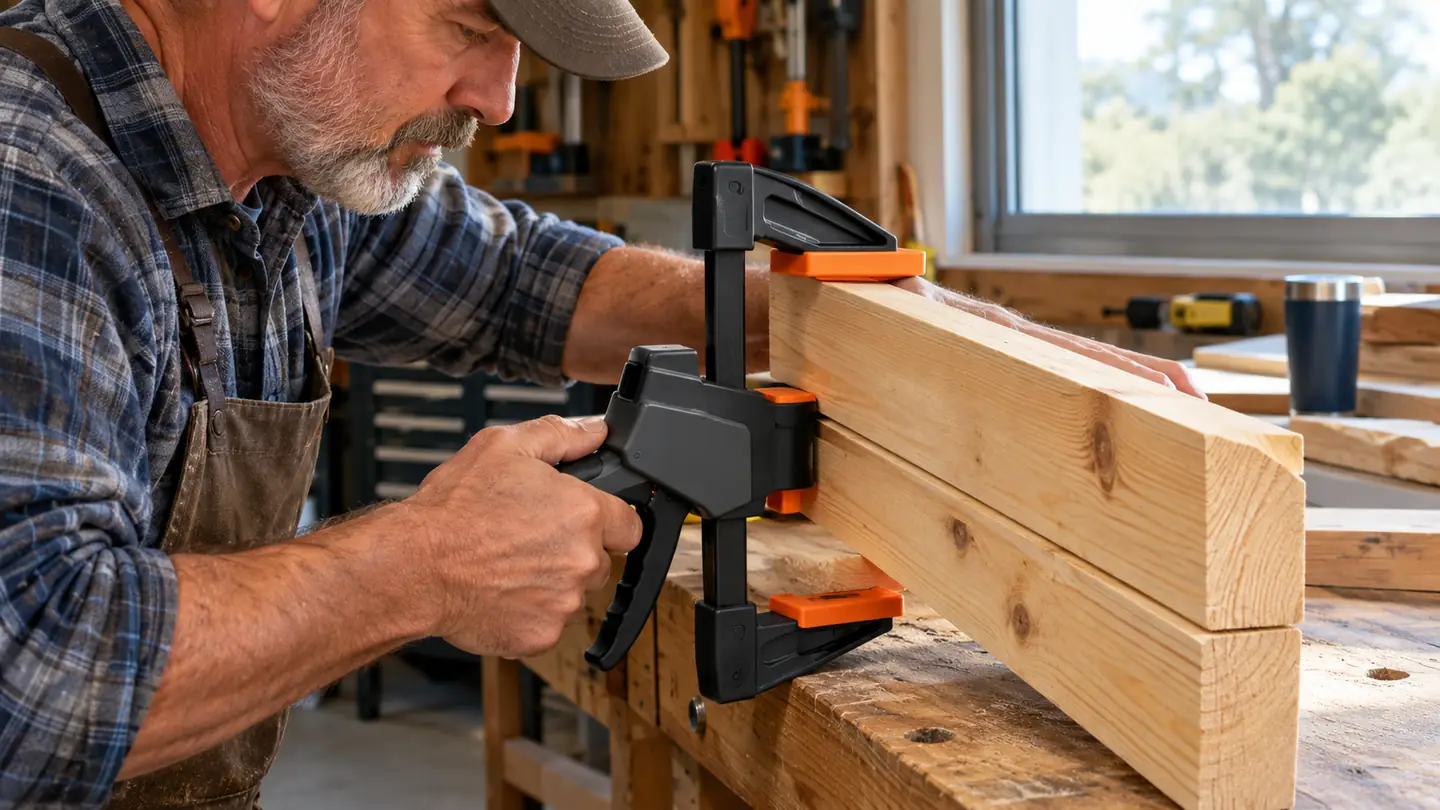
The one-handed operation is the whole ballgame for me. I work alone most of the time. My husband passed a few years back, and I've learned to take on these projects by myself. That means I'm usually holding a board in one hand and a drill in the other, and there is no third hand to turn a C-clamp's screw. The IRWIN Quick-Grip changes that completely. You pull the trigger to open the jaws, slide them over your two pieces, and press the handle until you feel the clamp lock. The wide padded pads spread the pressure evenly, so they don't dent soft pine or leave the kind of deep ring marks that a metal C-clamp can. I've used these to hold a shelf bracket in place while I drove screws into a stud, to keep a corner joint perfectly flush while the glue set, to clamp a mitred frame while the corners dried, and to hold a fence piece steady while I adjusted the saw. Every one of those was a two-minute job that used to be a ten-minute wrestling match. When you're working alone, that difference is not a luxury. It's the difference between finishing a project and putting it off another week.
The mini size is another reason these clamps live on my pegboard, not buried in the bottom of a toolbox. They're small enough to fit in a regular tool drawer, light enough for me to lift without any strain, and they'll reach into tight spots where a full-size clamp just doesn't fit. My workbench is a folding one that I set up against the wall, and I often have to work right at the edge of a board to see what I'm doing. With the IRWIN clamps, I can reach across the bench, make a small adjustment, and reposition the clamp without walking around to the other side. IRWIN has been making clamps for a long time, and these have held up well through months of regular use. The trigger still moves smoothly, the pads haven't cracked, and the mechanism locks tight every time. I've had cheap clamps that gave up after a few months. These still feel like the day I bought them. That durability is something you appreciate when you buy a four-pack expecting to use them for years.
There's also the release trigger, which is the kind of small detail you don't appreciate until you've lived without it. You don't have to crank a screw loose and wait for the pressure to drop. You just pull the trigger and the jaws open. That matters when you're working with a piece that's wet with glue and you don't want it to shift. I've rescued more than one project that started to slide the second I relaxed my grip, and with these clamps I can pop them off in a heartbeat. That kind of control makes a real difference when you're working alone, especially if your hands aren't as strong as they used to be. It also means you can quickly move a clamp from one spot to another as you work your way down a long glue-up, without having to back off a screw and start all over again.
One more thing I noticed is how quiet these clamps are. A C-clamp usually gives you that screeching metal sound when you crank it. The IRWIN Quick-Grip clicks softly when it engages. The sound is a small thing, but when you're working in the early morning before the rest of the house wakes up, it matters. It also tells you when the clamp is seated properly. You hear the click and you know the pads are holding. That feedback is useful, especially when you can't always feel the pressure through the handle.
Where C-Clamps Win
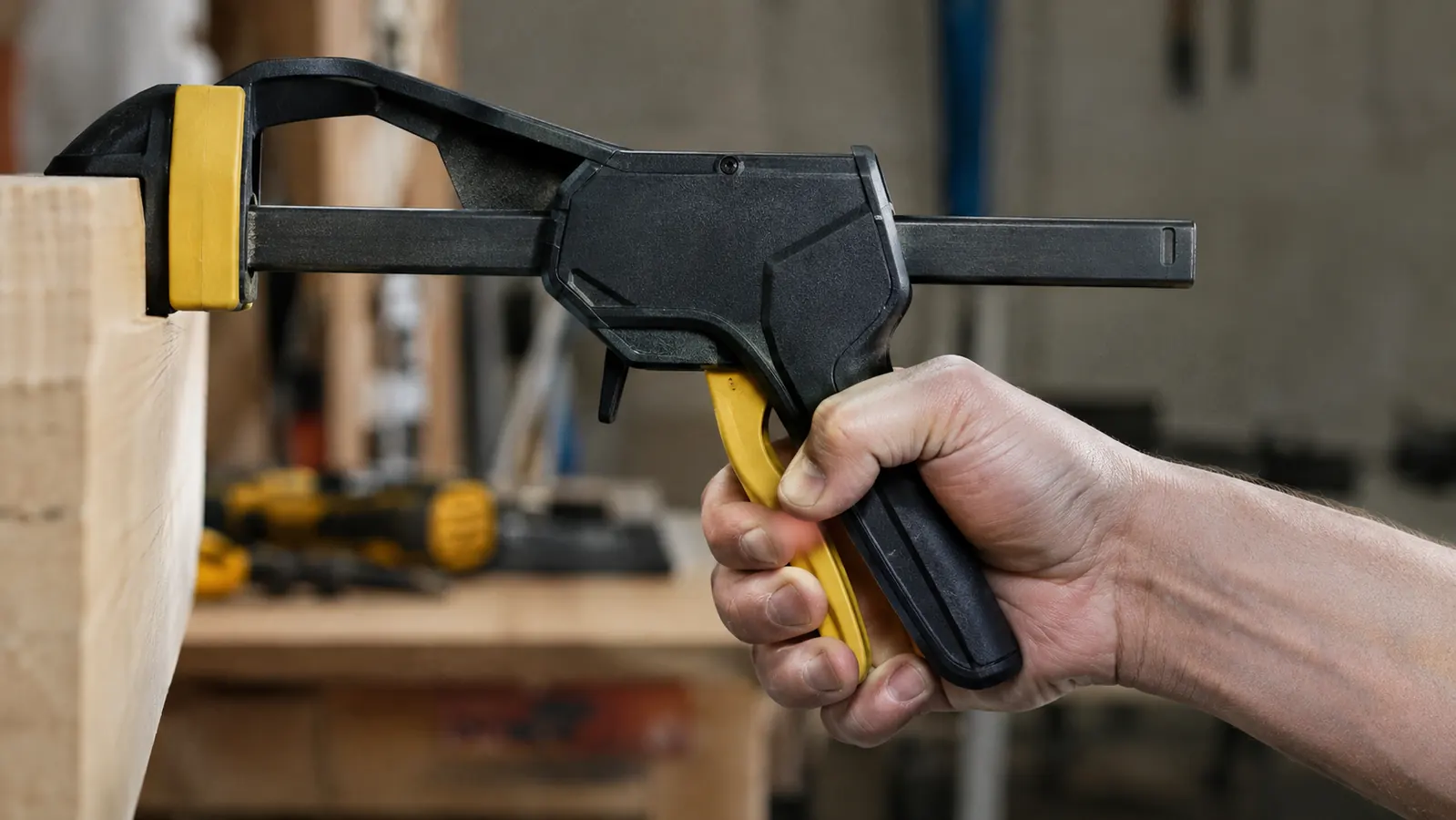
Let's be fair to the old C-clamp. It's simple, it's cheap, and it can apply a whole lot more force than a one-handed bar clamp. When I'm gluing two thick boards together edge to edge for a small tabletop, or when I need serious pressure to close a gap in a joint, I still reach for a C-clamp. There's nothing to break, no trigger to stick, and you can buy a good one for next to nothing at a garage sale. If all you're doing is holding a work piece down to the bench while you drill or plane, a C-clamp will do it all day without complaint. Some of my favorite clamps are hand-me-downs from my father-in-law, still perfectly serviceable after forty years. For that kind of heavy, stationary work, a C-clamp is hard to beat. It does one thing, and it does it without any frills.
The trade-off is the setup and release. A C-clamp needs two hands to position and sometimes three when the workpiece is moving. You have to hold the clamp, turn the screw, and keep the boards lined up at the same time. On a round or angled piece, the flat metal pads slip and dig in. Over-tightening leaves rings in softer wood, and if you forget to back it off, you can return to a project that's bowed or cracked. And because they're so cheap, people buy a pile of them and then end up avoiding them because they're so awkward. That's not the clamp being dumb, it's just the wrong tool for the fast, one-person jobs I do most often. When I want to get something done before dinner, I don't want to fight with a C-clamp. I want to click a trigger, clamp it, and move on.
The Clamps I Actually Reach For
If you're tired of wrestling with C-clamps one-handed, the IRWIN Quick-Grip 4-pack is the simple fix. It turns a frustrating chore into a two-minute job. See today's price and availability on Amazon.
Amazon Check the IRWIN Quick-Grip 4-Pack on Amazon →If you're still on the fence, here's the test I use. Picture yourself in the middle of a small project, alone, both hands busy. Do you want to be hunting for a clamp that will hold while you line up the screw, or fighting with a screw that won't stay? The IRWIN clamps make that moment easier. That's why I own them and why I'd buy them again. It's not about being fancy. It's about having the right tool ready so the project actually gets finished.
If you're wondering whether to buy the four-pack or just a couple of individual clamps, let me say this: get the four-pack. You'll be surprised how often you need more than one clamp at the same time. When you're gluing up a cabinet door or holding a long piece of trim, you want pressure at both ends. The four-pack means you always have a spare, and it costs less per clamp than buying them one at a time. I've used all four on a single project more than once.
Who Should Buy Which
If you're a weekend DIYer, if you work alone, if you repair furniture, build shelving, fix up an old house, or make gifts for family, get the IRWIN Quick-Grip set. It will turn frustrating two-handed jobs into quick one-handed wins. If you're doing heavy woodworking, laminating, or any job that needs maximum clamping force, keep a few good C-clamps around for those heavier moments. Most home workshops end up with both, and that's honestly the right answer. But if I had to pick only one set to recommend to a friend who's just starting out, it's the IRWIN Quick-Grip. They make the work feel less like work and more like progress.
An example that might help. Last spring I built a simple bookcase for one of my grandkids. I used the IRWIN Quick-Grip clamps to hold the shelf supports while I drove the screws. With C-clamps, I would have needed a helper just to keep the pieces steady. The clamps made the whole bookcase a Saturday morning project instead of a weekend battle. If you have any project that involves gluing or holding two pieces together while you fasten them, these clamps are going to earn their spot in your drawer. They're not for every job, but for the majority of jobs in a small workshop, they are the tool I reach for first.
Grab a Set Before Your Next Project
The IRWIN Quick-Grip mini bar clamps are the ones I keep on the pegboard. They take the fight out of one-person clamping. Check the current price on Amazon.
Amazon See the IRWIN Quick-Grip on Amazon →