
I bought my first set of Irwin Quick-Grip mini bar clamps in early spring, mostly because I was tired of wrestling with a bench vise that weighed more than I do. The project was a set of six shelf brackets for the linen closet, and I needed a third hand to hold a piece of oak trim in place while I drove the screws. What I did not expect was that a four pack of six inch clamps would end up living on the edge of my folding workbench for the rest of the year. They have saved me more frustration than I can count, and that is the honest truth.
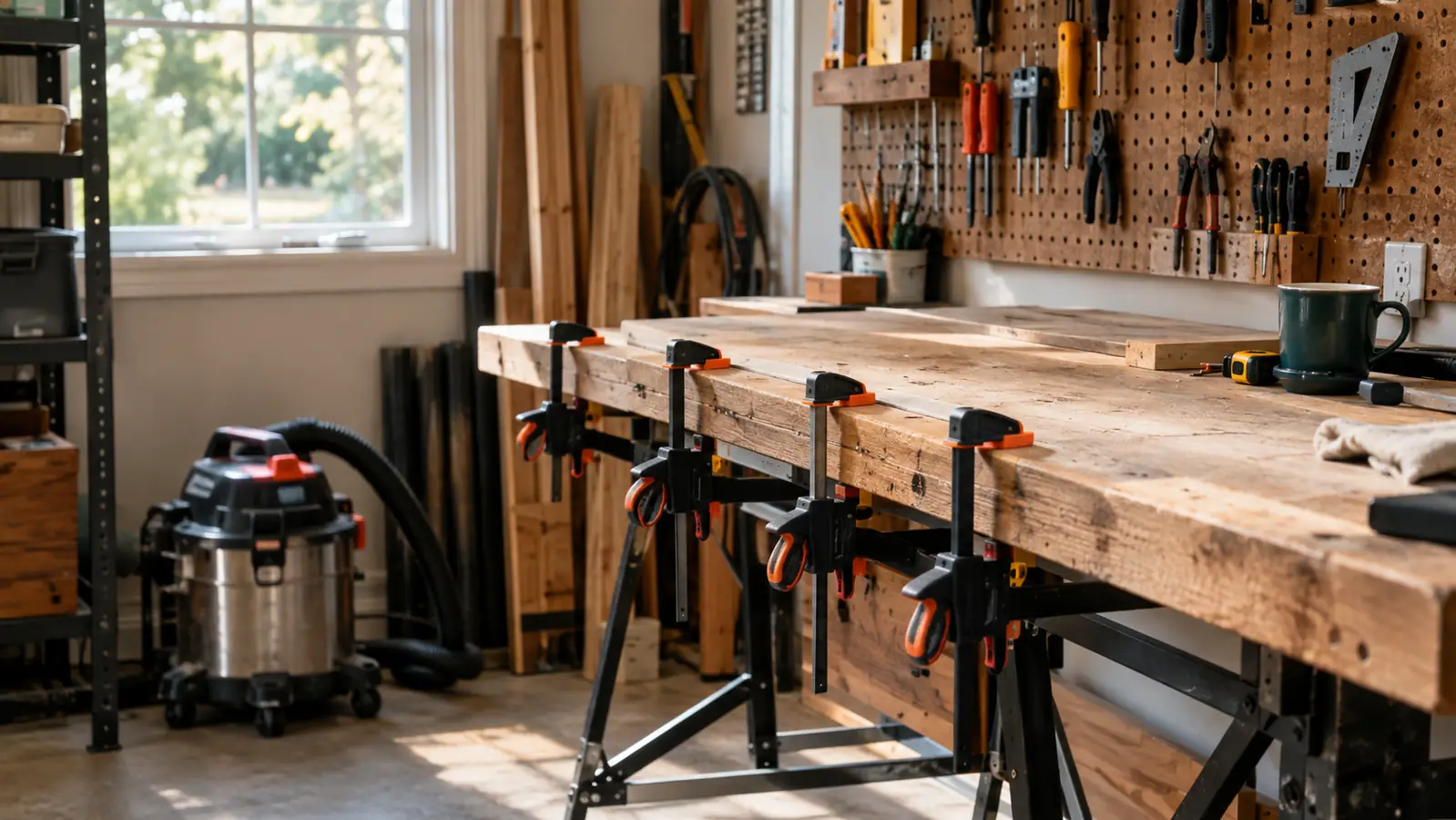
I am Peggy Hollister. I live outside Spokane, I bowl on a Tuesday night league, and I have three grandkids who keep me busy with small building projects. My workshop is one side of a two car garage with a pegboard wall, a folding workbench and a shop vac that has seen better days. I am not a professional carpenter. I am the person who stands in the hardware aisle longer than anyone else, reading the back of the package and wondering if the thing will actually work one handed. So this review is written from that place: months of real use, a few mistakes, and a clear answer about whether these clamps earn their spot.
The Quick Verdict
The Irwin Quick-Grip mini bar clamp 4 pack is the clamp I reach for first. It holds tight, opens and closes one handed, and has taken real abuse around my house for months. It is not a heavy duty F clamp, but for weekend projects it is hard to beat.
Amazon Check Today's Price →The 6-Inch One-Handed Clamp That Earned a Permanent Spot on My Workbench
After months of daily use on trim, shelving, deck boards and glue ups, the Irwin Quick-Grip mini bar clamp 4 pack is the tool I grab first. Check today's price on Amazon to see if it fits your toolbox.
Amazon Check Today's Price on Amazon →How I've Used It
I keep a running list of projects in my head, and the clamps have touched almost every one. The first job was the linen closet shelving. I glued two pieces of poplar together for each shelf, and the mini clamps held the seam while the glue dried. The trigger action meant I could set the clamp with one hand and adjust with the other, which matters when you are balancing a board on your knee.
Since then they have held deck boards while I pre drilled, kept trim tight to the wall while the construction adhesive set, and clamped a raised garden bed frame together for the grandkids. I also use them for small repairs: a wobbly chair rung, a split drawer side, a picture frame that would not stay square. The six inch reach is short, but for work that fits in your hands it is plenty.
The best test came in August when I replaced a section of deck railing. I needed both hands for the drill, so the clamps held the new pickets in place while I worked. They did not slip, they did not mar the wood, and they were easy to move down the line as I went. That is the whole job, really.
The clamps also came along for a weekend at my daughter's place when she needed a shelf hung and a drawer fixed. They rode in a canvas tote with a hammer and a level. That is the other thing I like about them: they are small enough to travel. A four pack fits in a lunch box, which means the tool is actually where the project is.
What Makes the One-Handed Design Work
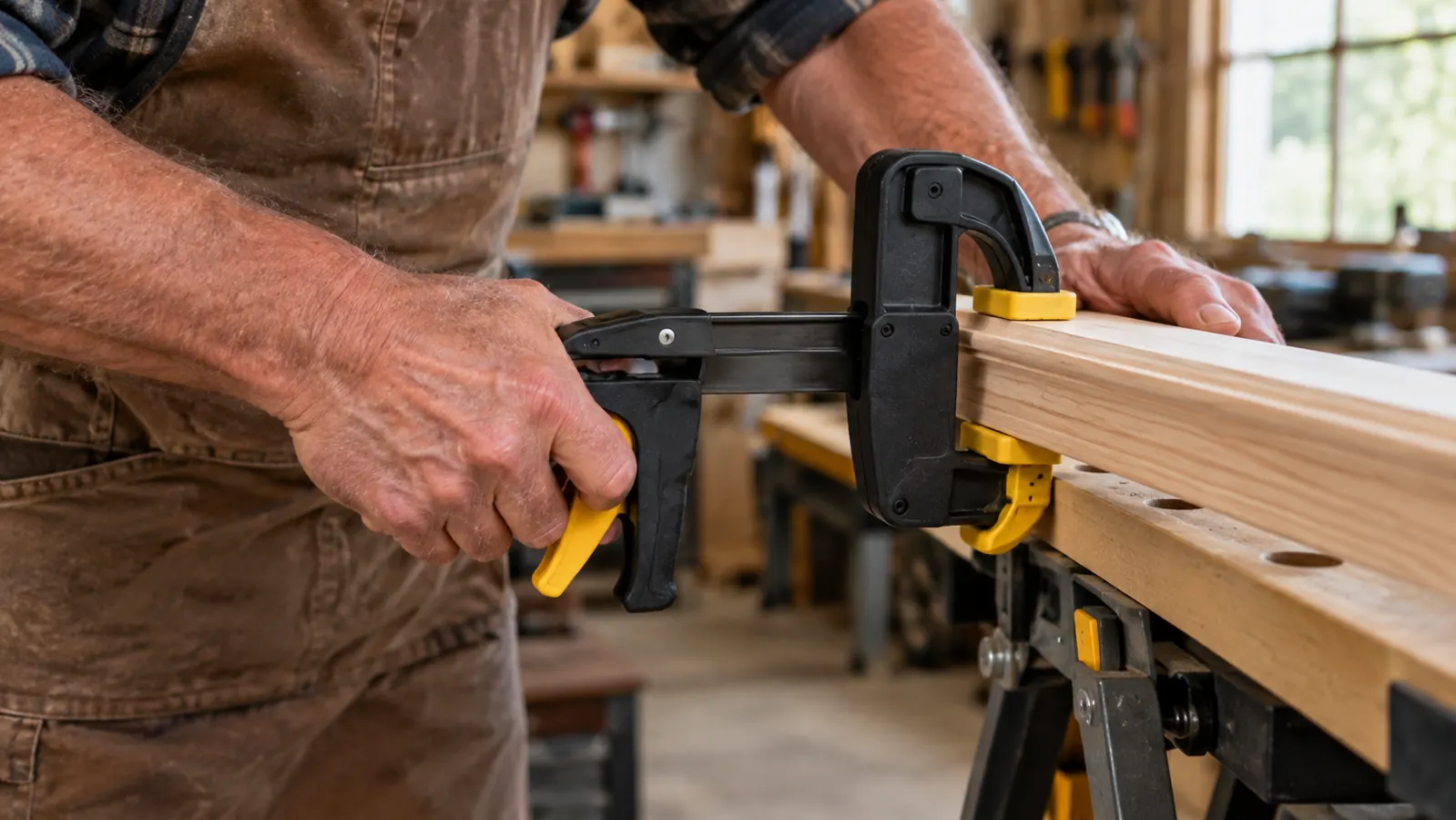
The reason these clamps are different from the old C clamps in my drawer is the trigger. You squeeze the handle to slide the jaw closed, and a release trigger lets go. I can operate the whole thing with one hand, which is not a gimmick when you are working alone. I have lost count of the times a C clamp needed three hands: one for the clamp, one for the work, one for the wrench.
The grip pads are wide and soft enough to protect the wood. I have clamped painted trim and stained oak without leaving dents, which was a worry at first. The jaws open wide enough for most small jobs, and the trigger travel lets you fine tune the pressure instead of cranking a handle.
The body is a glass filled nylon bar with a metal rail, so it is stiff without being heavy. I can hold three clamps in one hand and still have fingers free. For a person with smaller hands, that matters. My wrists are not what they were twenty years ago, and every tool that works without a fight earns its place in my shop.
There is a learning curve, but it is short. The first time you squeeze the trigger, the jaw moves faster than you expect. After a dozen uses, you learn to feather the pressure. Now I can set a clamp without looking, which is the real test of a tool you use every week.
How It Holds Up Over Months of Use
I am rough on tools. They get knocked off the workbench, left in the rain once, and stuffed into a bucket with screwdrivers and a hammer. After months of that, all four clamps still open and close smoothly. The trigger on one felt sticky for a week after a glue spill, but it worked itself clean with use. No broken parts, no bent rails, no rust.
The plastic body is the part that made me skeptical at first. I grew up around cast iron clamps, and I expected the nylon to crack the first time I over tightened. It has not. The clamp flexes a little under heavy pressure, which actually helps it grip without galling the wood. I do not use it as a vise replacement, and I would not stand on it, but for its intended job it has been dependable.
The pads still have their grip after months of use. They are not scratched or peeling. The release trigger has not worn loose. The only cosmetic change is a few scuffs on the bar where I dropped it on concrete, which is exactly what I want from a tool that costs what these cost.
The release trigger takes a beat to find if you grab the clamp in a hurry. I have picked it up wrong more than once. It has never jammed, and after a few months the motion is automatic.
I expected the nylon body to crack the first time I over tightened. Months later, all four clamps still open and close like the day I bought them.
Where It Shines Around the House
Trim work is the big one. When you are nailing quarter round or shoe molding, the clamp holds the piece tight to the floor while the adhesive grabs. The low profile means the clamp does not tip over the way a larger bar clamp does.
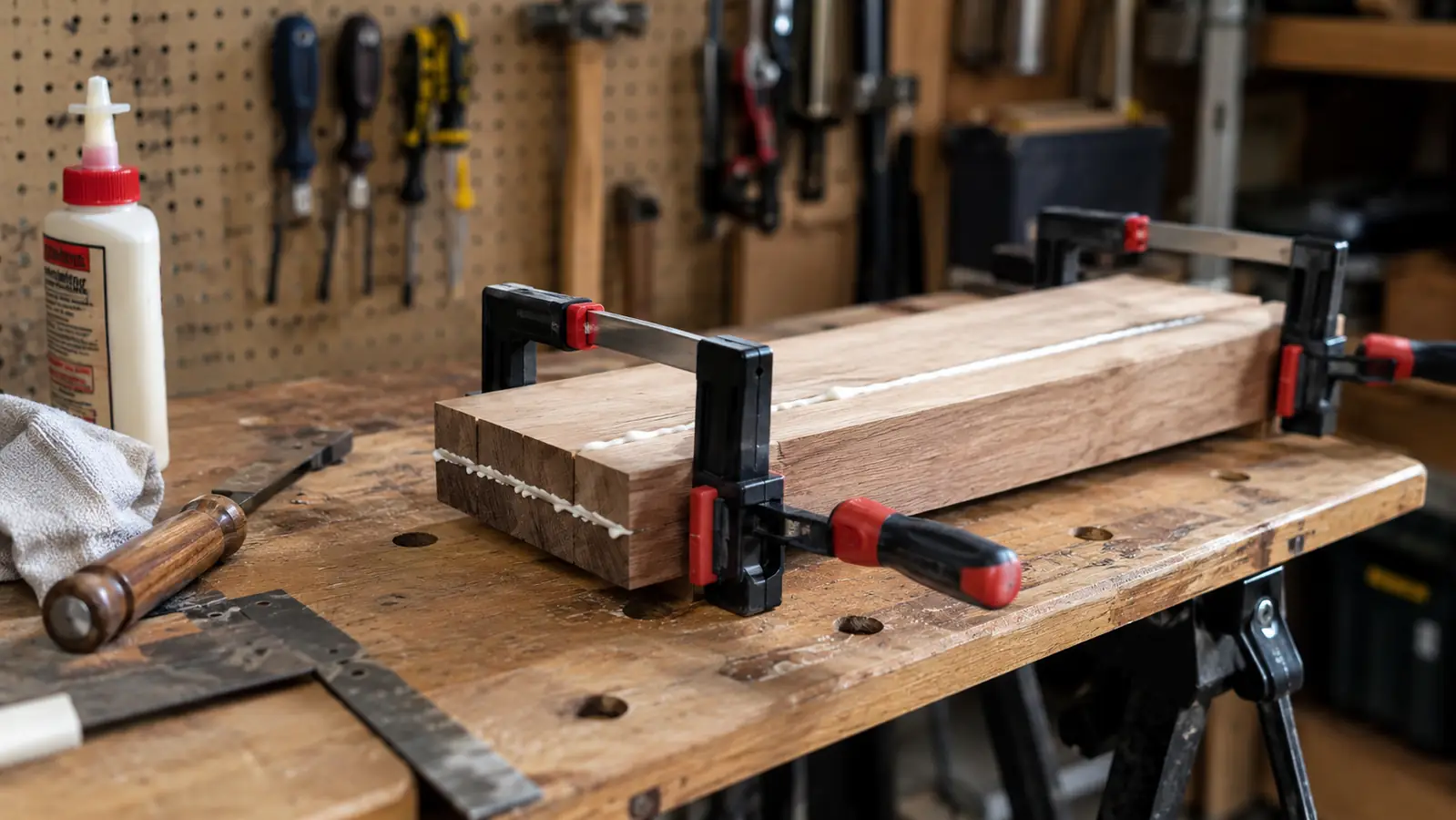
Glue ups are a close second. Picture frames, small boxes, a cutting board, the raised bed frame. The even pressure across the joint means less squeeze out and a tighter line. I have also used them to hold a sanding block on a curved edge and to keep a stencil flat against a cabinet door while I painted.
They are also the clamp I grab for quick repairs. A loose hinge, a drawer that drags, a split in a stair tread that needs glue and pressure. Because they are small and light, they stay on the workbench instead of living in a drawer, and tools that stay out get used.
Painting and staining is another quiet win. I clamp a piece of scrap to the edge of a work table, then clamp the thing I am painting to the scrap. It keeps wet surfaces off the bench and leaves both hands free for the brush. Small trick, big difference.
Tradeoffs and Honest Gripes
The biggest limitation is the six inch opening. It is called a mini bar clamp for a reason. It will not reach across a full cabinet or hold a door while the glue dries. For anything wider than a few inches, I reach for a longer clamp or a strap clamp, and I accept that I need a second tool for those jobs.
The clamping pressure is also modest compared to a steel C clamp or a pipe clamp. For most woodworking and household repairs, it is plenty. If you are trying to pull a warped board into submission or hold two thick beams together, this is not the tool. It is a light duty clamp, and the packaging is honest about that.
One more thing: the four pack means you will probably want more than four. They are small and you use them in bunches. I have already ordered a second set. That is not a complaint, it is a warning about how useful they are.
One thing to watch: the release trigger can pinch if you are not paying attention. It has not drawn blood yet, but I have learned to keep my fingers clear when I pop the jaw open. That is true of every clamp I own, so I do not count it against this one.
Alternatives I Considered
Before I settled on the Irwin Quick-Grip, I looked at the old school C clamps that have been in every garage since my father's day. I tested one of each over a weekend to see which one I actually reached for. They are cheap, they are strong, and they are a pain in the neck to use one handed. I also considered the longer bar clamps for the deck project, but the mini size covered most of what I do.
The other option was a set of spring clamps, which are faster but do not have the same holding power or adjustability. Spring clamps have their place, and I still own a few, but they do not pull a joint tight the way a trigger clamp does. The trigger clamp gives you controlled pressure, which is the difference between holding a piece in place and actually pulling a joint tight. For the kind of work I do, the trigger design wins.
There are also cheaper no name clamps on the market. I have owned a few, and the triggers bind, the pads slip, and the bars bend. The IRWIN name has been around for a long time, and the build quality is why these have held up for months without a problem. You pay a little more and you get a tool that works every time.
What I Liked
- One-handed trigger release is genuinely useful
- Wide soft pads protect wood and trim
- Four pack covers most small jobs
- Survived months of garage abuse without failing
- Low profile works in tight spots
Where It Falls Short
- Six inch opening limits reach
- Modest clamping pressure for heavy work
- You will want more than four
Who This Is For
This clamp is for the weekend DIYer who works alone and needs a third hand. It is for the person gluing a picture frame on the kitchen table, the one fixing a wobbly chair, the one building a planter box for the porch. If your projects fit in your hands, this is the clamp you will reach for.
It is also for people with smaller hands or achy wrists. The trigger is easy to squeeze, the clamp is light, and you never have to crank a handle with both arms. I bought these after my husband passed and I started doing projects myself, and they were one of the first tools that felt like they were designed for me.
The other people I would point to these clamps: new woodworkers, apartment dwellers who do not have a full shop, and anyone who has ever asked a neighbor to hold a board because they could not do it alone. This is the tool that makes you stop asking.
Who Should Skip It
If your work is heavy framing, cabinet doors, or anything that needs real clamping force, skip these and get a proper bar clamp or a pipe clamp. The mini clamp is not a substitute for a vise. If you need to reach across a wide panel or pull a thick beam into line, the six inch jaw will frustrate you.
And if you are the kind of person who buys a tool and expects it to do everything, this is not that tool. It is a small, light, honest clamp that does its job well. If that describes you, get a bigger clamp and do not look back. That is exactly why I recommend it, but it is worth knowing before you buy.
The Clamp I Reach for Every Time
If you do weekend projects around the house, the Irwin Quick-Grip mini bar clamp 4 pack is the most useful small tool I have added to my shop this year. Check today's price on Amazon and see if it earns a spot on your workbench too.
Amazon Check Today's Price on Amazon →