If you wear prescription glasses, you've stood at a workbench and asked yourself the same thing I did: aren't my everyday glasses good enough for shop work? I asked that question for years, right up until the afternoon I was trimming a cedar shelf and a knot popped out of the grain and smacked me in the cheekbone, an inch below my eye. The short answer is no. The NoCry safety glasses give you ANSI Z87.1 rated impact protection, side coverage, and an anti-fog coating for a fraction of what your last pair of prescription frames cost. But they can't correct your vision. So this isn't a fight over which pair is better. It's a question of which pair is on your face for which job, and in the next few minutes I'll show you exactly how I tested both, what surprised me, and which pair earns a spot on your pegboard hook.
Here's the honest one-paragraph version. For anything that can throw a chip, a knot, or a stray staple at your face, I reach for the NoCry pair every single time. For reading, driving, bowling on a Tuesday night, and the rest of a normal day, my prescription glasses go back on. I spent a full week swapping between the two through real projects, and the answer got clearer with every cut. Keep your good glasses for the living room. Buy a dedicated pair for the shop. Now let me show you the details that settled it.
| NoCry Safety Glasses | Prescription Glasses | |
|---|---|---|
| Impact protection | ANSI Z87.1 rated, impact resistant lenses with side coverage | Everyday lenses are not safety rated and can chip or crack on a flying shard |
| Vision correction | Flat lens with no prescription built in | Corrects your vision to exactly what your eye doctor prescribed |
| Price and replacement | A fraction of what lenses and frames cost; a scratch is a shrug, not a bill | Scratched or lost frames and lenses are a real expense and a trip to the optometrist |
| Lens material | Impact rated material with a scratch resistant coating | Lens material depends on your prescription; most everyday lenses are not certified for impact |
| Fog resistance | Anti-fog coating that holds through a sweaty afternoon of sanding | Fog up fast when you step from a cool garage into warm humid air |
| Fit at the workbench | Adjustable arms and no-slip grips that stay put when you lean over a bench | Nosepads slide when you sweat, and you fret about scratching them |
| Everyday wear | Purpose built for the shop; you won't want them on at dinner | On your face all day, every day, for years |
| Best for | Shop work, yard work, anything with flying debris | Life outside the shop: driving, reading, everything else |
Where NoCry Wins
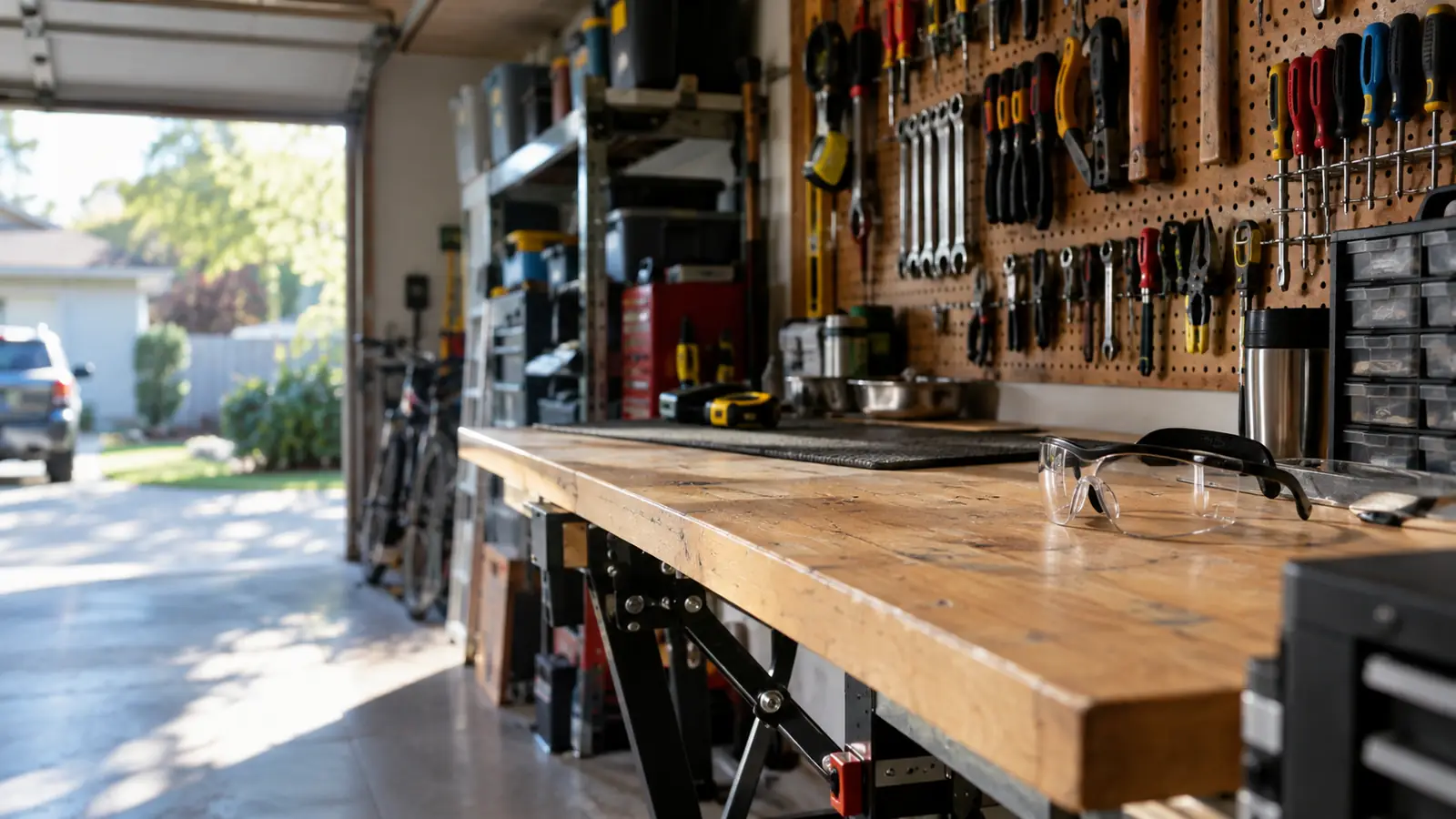
Start with the rating, because that's the whole ballgame. The NoCry pair is ANSI Z87.1, the impact protection standard that actually means something. My everyday glasses aren't rated for anything. They are good lenses, but they were made to help me see, not to stop a piece of wood moving at speed. The day I felt the difference, I was cutting deck boards and that knot popped loose, hit the lens of the NoCry pair dead on, and bounced right off. I stopped, took the glasses off, and checked the lens. Not a mark. My first thought was blunt: that could have been my eye. The whole moment lasted two seconds, but I still replay it every time I strap on a pair of glasses before a cut.
The second thing is what I'll call the scratch factor. I treat my prescription glasses like fine china. I handle them carefully, I clean them with the special cloth, and I set them down somewhere safe. You cannot work like that. Real work means leaning over a bench, reaching into a low cabinet, setting a pair of glasses down on a dusty sawhorse. With the NoCry pair, the relationship flips. I don't protect them. They protect me. And that single swap changes how you work. If they pick up a scratch, so what. The lens is still easy to see through, the impact protection is still there, and the replacement cost is small enough that I don't spend a single second worrying about it. That freedom is worth more than the glasses themselves.
The fit surprised me, and I'm picky about fit. The arms adjust and the no-slip grips hold tight, even when I'm bent over a low shelf or looking straight down at a drill bit. My regular glasses slide down my nose the minute I start sweating. The NoCry glasses stay put. I wore them through a full afternoon of sanding and cutting and honestly forgot they were on my face, which is the highest compliment any piece of safety gear gets from me. They're light, the adjustable arms let me set them wide enough for my head, and they don't pinch behind my ears by the end of a project. The anti-fog coating earns its keep too. I moved between a cool garage and warm afternoon sun a dozen times, and the lenses stayed fog free the whole while.
One more thing that surprised me: the side coverage. My everyday glasses are open on the sides. A bit of sawdust, a bit of grit, a tiny piece of wire, all of that can come at you from the side, and your regular frames just shrug. The NoCry lenses curve around enough to catch what comes from the edges, and after a week of projects I noticed it most when I was grinding a burr off a metal bracket. Little hot specks of metal hit the lens and the side of the frame, not my eye and not my temple. That detail is worth repeating because most people think about what's in front of them and forget about what's coming from the corners.

Where Prescription Glasses Win
Now the part nobody in the hardware aisle wants to tell you. If you need correction, the NoCry pair cannot do the one job your prescription glasses do. I put them on and the tape measure at arm's length goes a little soft around the edges. That's no knock on lens quality. It's simply the difference between a lens ground to your prescription and a flat lens with no prescription built in. Blurry vision at a workbench is its own hazard. You're reading a speed square, checking a level, trusting what you see at the end of a saw blade. If the numbers are fuzzy, you make mistakes. So the NoCry pair is not a substitute for your prescription glasses. It's a companion to them, and the sooner you make peace with that, the better both pairs will serve you.
Prescription glasses also win the everyday wear contest flat out. Mine are on my face from coffee in the morning until the news at night. They're fitted to me, they're comfortable, and I reach for them without thinking. No safety glasses are going to beat that for the 95 percent of life that doesn't involve spinning blades or flying debris. And let's be honest about looks while we're at it. I bowl on a Tuesday night league, and I am not wearing safety glasses on the lane. The right tool for the right job cuts both ways, and my prescription glasses are the right tool for most of my life. The NoCry pair is the right tool for the hours at the workbench, and wanting both is not indecisive, it's sensible.
There's the comfort of the familiar, too. My prescription frames have settled into my life over years of wear. The nosepads, the hinge, the way they sit, all of that is dialed in. A brand new pair of safety glasses needs a breaking-in period no matter what. For the first hour or two I noticed the NoCry arms pressing a little differently against my temples, until I adjusted them to fit. That's a small thing, but it's real. If you buy a pair of safety glasses, give yourself an afternoon to adjust the arms and get used to the feel before you judge them. My first impression was that the NoCry pair felt snug. After one afternoon of fiddling with the adjustments, they felt like mine.
Finally, prescription glasses win on the simple math of frequency. You put them on dozens of times a day, so the small comforts compound. The weight on your nose, the way they stay put through a yawn, the exact spot they live on the nightstand, all of that is a relationship built over years. A pair of safety glasses is a tool you pick up for a specific job. That's not a criticism of the NoCry pair. It's the difference between a daily companion and a piece of workshop gear, and you need both to do their own job well. Asking one pair to be both is how you end up doing shop work in a pair of glasses you're afraid to scratch.
That knot bounced off the lens and all I could think was: that could have been my eye.
The pair you don't have to baby is the pair you'll actually wear.
NoCry's ANSI Z87.1 rated safety glasses adjust to fit, stay put when you sweat, and cost little enough that a scratch ends the worry, not your day. They hang on my pegboard hook, ready for the next project, and they belong on yours too. Your eyes are worth the two minutes it takes to adjust the arms.
Amazon Check Today's Price on Amazon →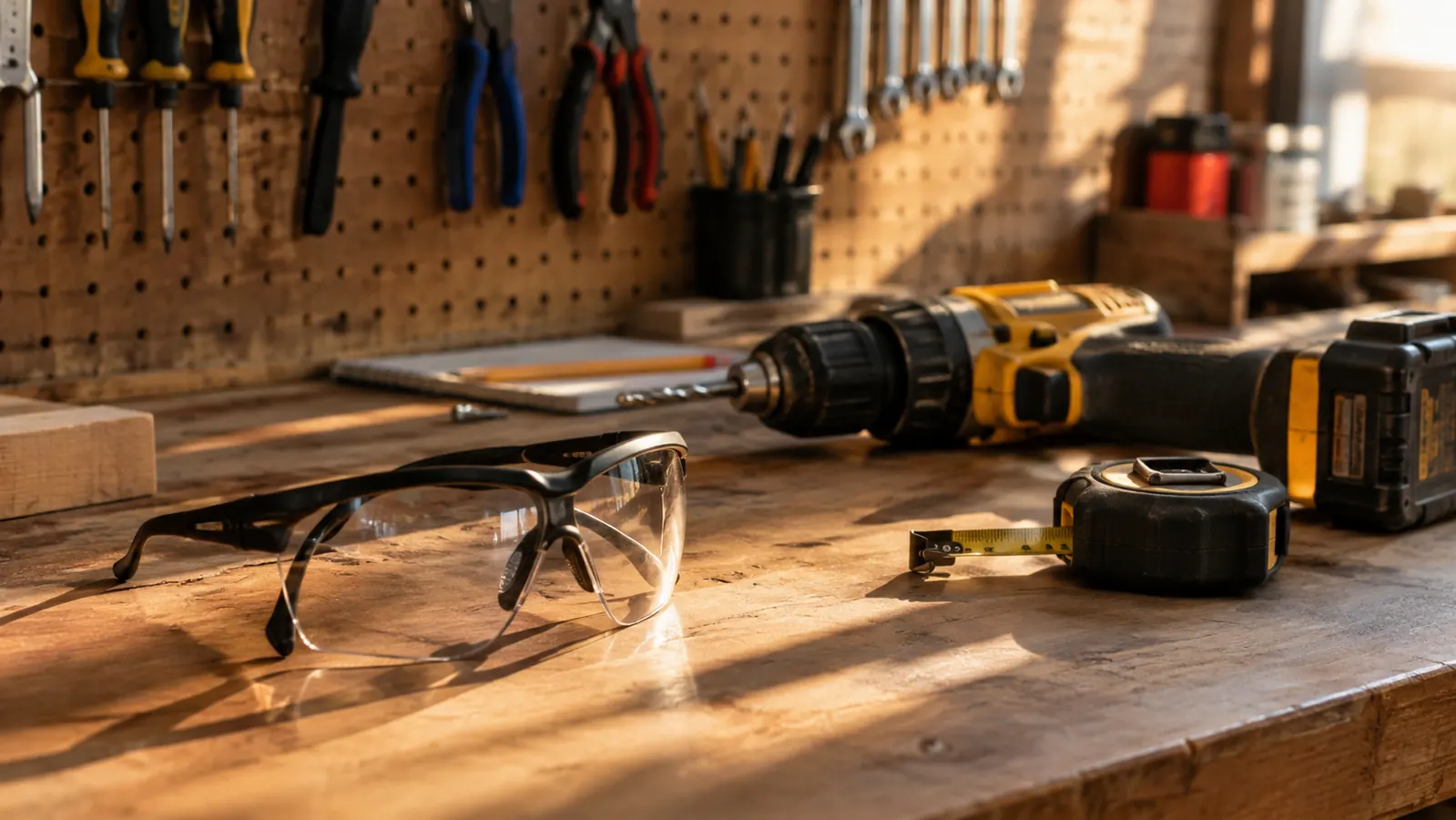
Who Should Buy Which
Buy the NoCry pair if you spend any real time on projects, even the small ones. If you wear contact lenses, you have no excuse to skip safety glasses, and this is an easy, comfortable first pair to leave sitting on the workbench so it's there when you need it. If your prescription is mild, or you only need reading help up close, you may find the flat lens is plenty for most shop work. And if you've been doing everything in your everyday glasses because it never occurred to you to buy a dedicated pair, consider this your nudge. A dedicated pair of safety glasses is one of the cheapest upgrades you can make to your workshop, and it's the one you'll thank yourself for.
Let me put it in terms of worst case. With the NoCry pair on the bench, the worst case is a scratched lens that costs pocket change to replace. Without them, the worst case is a chip in your prescription lens two weeks after you paid for it, or worse, a piece of wood meeting your eye. Once you set those two outcomes side by side, the decision stops being about money and starts being about common sense. This is the same reason I wear gloves when I'm hauling lumber and boots when I'm on the ladder. Safety gear is not a luxury. It's the stuff that lets you keep doing the work you enjoy, and it's cheap insurance against the one project that goes wrong.
And who should skip the NoCry pair? Honestly, someone whose only jobs are hanging a picture or changing a light bulb at the door probably doesn't need dedicated safety glasses. But the minute you're cutting, sanding, drilling, or doing anything that sends material into the air, you need impact rated protection on your face. If your prescription is strong and you can't wear contacts, don't try to tough it out with blurry vision in a flat lens. Talk to your eye doctor about prescription safety lenses, or look for a style built to fit over your regular frames. Some people genuinely need both solutions, and there's no shame in that. The mistake is wearing nothing at all because the perfect answer didn't exist.
Whether you need correction or not, the rule is the same: match the glasses to the job. Your prescription pair is for seeing clearly, and your safety pair is for the moments that try to hurt you. Buy both, keep them where you'll reach for them, and you'll never stand at the workbench wondering if today is the day you should have put something better on.
Keep your good glasses for the dinner table.
Pick up a pair of NoCry safety glasses for the workbench and stop risking the pair you actually need to see through. It's the cheapest insurance in the workshop, and it takes about two minutes to adjust the arms to your head. Your eyes will be glad you did.
Amazon Check Today's Price on Amazon →