If you have small hands, you know the exact moment this becomes a problem. You're standing in the hardware aisle, and every pair of gloves on the peg either swallows your fingers or bunches up in your palm the second you make a fist. The package promises 'one size fits most,' and you have learned what that really means. It fits most people. You are not one of them, and you are tired of working with gloves that fight you the whole way through a project.
I learned this the slow way, replacing deck boards on my house outside Spokane last spring. For years I bought whatever glove was on sale, and for years I worked with fabric bunched in my palm and fingertips that hung past my own by half an inch. Then I spent a full Saturday trying on every glove the hardware store carried. The pair I kept coming back to was the Mechanix Wear Original Touchscreen Work Gloves, and it taught me something I wish I'd known years ago: the brand matters less than the fit, and the fit starts with the size, not the label.
The Glove That Finally Fits Small Hands
The Mechanix Wear Original Touchscreen Work Gloves are the pair I kept reaching for, and the pair I've bought again since. The listing I've linked is a size Large, but the same glove is sold in extra small and small. Use the size chart on the page and pick your size before you order.
Amazon Check Today's Price on Amazon →Five Steps to a Pair That Fits
Here's the method I landed on after that Saturday of trying on every glove the hardware store carried. It's five steps, it takes about ten minutes total, and it works for any brand, not just the one I keep coming back to. The order matters, so don't skip the measuring, and don't let the packaging talk you out of what your hand is telling you.
Step 1: Measure Your Hand, Don't Guess
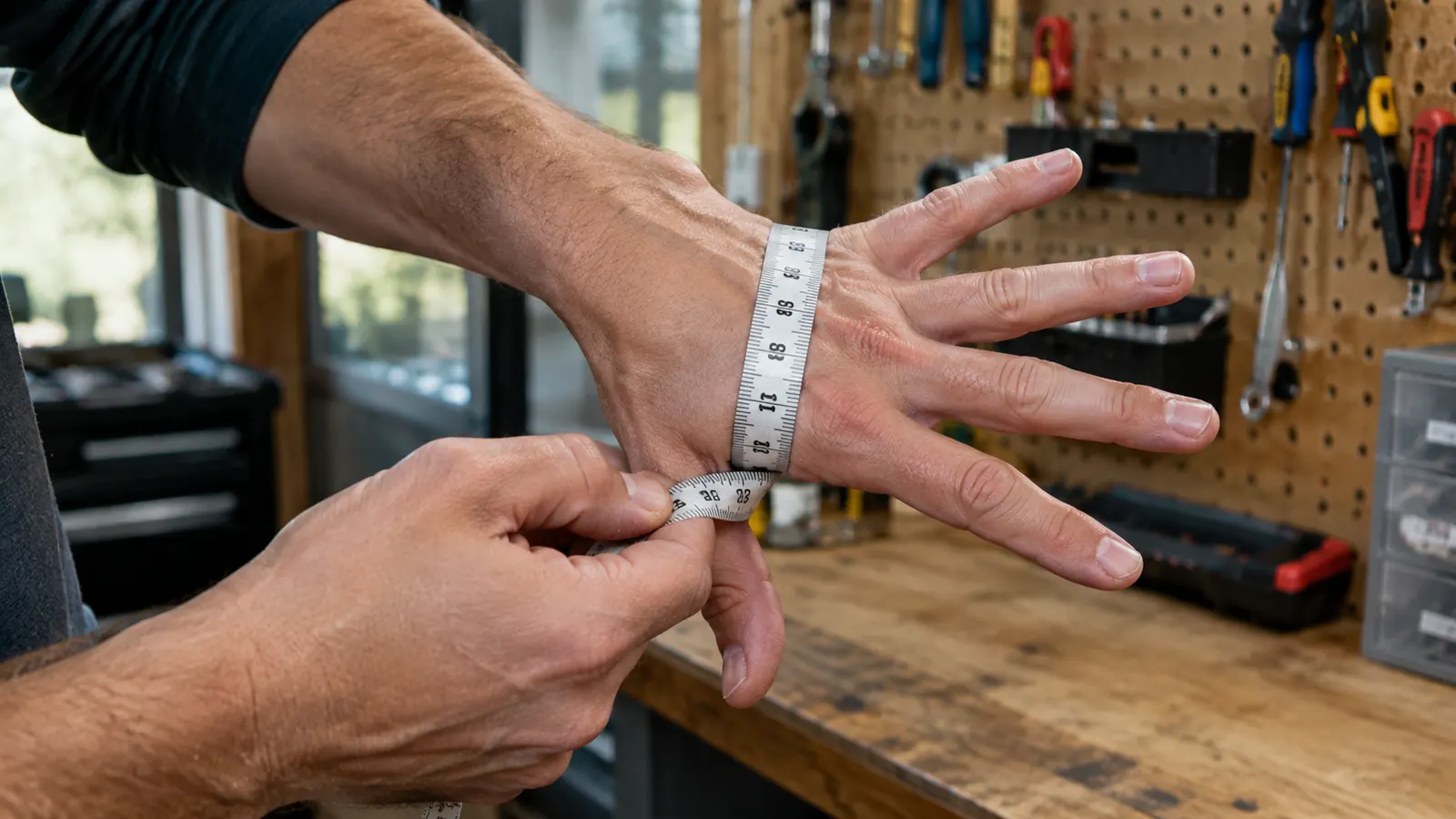
Before you look at a single glove, wrap a fabric tape measure around the widest part of your palm, just below your knuckles. Don't include your thumb. Write that number down. That measurement, in inches, is what every size chart in the world is built on, and it's the only honest way to compare one brand to another. Do it twice, because the first measurement is always the one you rush.
The reason this matters is that sizes are not standard. A small in one brand can measure the same as a medium in another, and a 'women's small' can be cut so narrow that it squeezes your hand into a claw. Mechanix Wear publishes a size chart for the Original Touchscreen gloves, and it goes down to extra small, a size most brands don't bother to make. Measure first, then compare your number to that chart. It takes ninety seconds, and it will save you from ordering a pair you have to send back.
Here's the thing that surprised me: my hand measurement puts me solidly in a size I would never have picked off the rack. I had been buying medium gloves for years because small felt like it couldn't possibly fit a grown woman, and medium was what normal people bought. The tape measure said otherwise, and the first pair I ordered in my true size felt like it had been made for me. Trust the number, not your assumptions.
Step 2: Ignore 'One Size Fits Most'
That phrase is doing a lot of work, and none of it is for you. A glove that is too big is not just annoying. When the fingertips extend past your own, you lose the ability to feel what you're gripping, which is exactly when you fumble a screw or catch a finger between two boards. Loose material in the palm folds under a tool handle and gives you blisters, and it makes a drill feel like you're holding it with oven mitts on.
A snug glove, by contrast, disappears. You forget you're wearing it, and that's the test. If you can make a fist and feel the fabric pull tight across the back of your hand without cutting off circulation, you're in the right neighborhood. The Mechanix Wear Original is a good example of a glove that runs true to its chart, so a small actually fits a small hand instead of fitting an average man's hand and hoping for the best.
There's also a safety reason to skip the loose fit, and I don't say this to preach. A glove with excess fabric can get caught on a spinning bit or a moving belt, and that's the kind of accident that ends a project and a week. The whole point of a glove is to keep your hand safe and in control. A glove that doesn't fit is a glove that puts you at risk, which is the opposite of what you bought it for.
Step 3: Match the Glove to the Job
The second thing I learned that Saturday is that gloves are not interchangeable. The heavy leather rigger's glove that protects you from barbed wire is the wrong tool for installing shelving, because you can't feel the screw head, and you end up dropping screws into the drywall gap. For most of the work I do around my house, deck boards, trim, the raised garden bed, shelving, I need dexterity more than I need armor.
That's the niche the Mechanix Wear Original fills. It's a thin, snug glove with a synthetic palm that grips, and it lets you pick up a nail, thread a screw, and handle a tape measure without taking it off. There are heavier leather-palm versions for serious demo work, but for small hands especially, dexterity is the feature that matters most. A thick glove in a small size still gives you thick fingers. A thin glove in the right size gives you back your hands.
The touchscreen part deserves its own mention, because it sounds like a gimmick until you use it. I keep my phone in my pocket for the level app and for the photo I take of the wiring before I disconnect it. With the Mechanix Wear Original Touchscreen gloves, I check the photo, put the phone away, and keep going. With my old gloves, I was pulling a glove off with my teeth thirty times a day. It's a small thing that adds up to a much smoother afternoon.
Step 4: Test the Fit the Way You'll Actually Work
Here's the mistake I made for years: I tried gloves on with an open hand and called it good. The fit test that matters is the one where you grip something. Put the glove on, pick up the heaviest tool you'll use it with, and make a fist around the handle. The fingertips should sit right at the end of your fingers, not past them, and not so tight that they pull when you bend. Then open your hand wide. If the palm fabric tents up, the glove is too big.
Check the cuff, too. It should hug your wrist without squeezing, so sawdust and gravel stay out but your hand doesn't go numb after an hour. And if you're buying a touchscreen glove, test the fingertips against your phone before you commit. The whole point of a glove like the Mechanix Wear Original Touchscreen is that you can check the instructions on your tablet without taking it off, and that only works if the fingertips actually register. A glove that fails that test is just an ordinary glove with extra marketing.
If you're ordering online, which is how I buy most of my tools now, the same test works at home. Order the size your measurement says, try it on, grip a tool, and be honest with yourself in the first five minutes. Most gloves, including the Mechanix Wear Original, have a straightforward return policy through Amazon, so there's no reason to keep a pair that doesn't pass the fist test out of politeness. You're not being picky. You're being practical.
Step 5: Care for Them So They Keep Their Fit
A work glove doesn't have to be expensive to last, but it does have to be washed, and this is where most people quit. I toss mine in the washing machine on cold with the rest of my work clothes and let them air dry. Never put them in the dryer. The heat shrinks the synthetic palm and curls the fingers, and a glove that fit perfectly on Tuesday fits like a kid's mitten by Friday. I wash mine every couple of weeks during a big project, and they come out looking almost new.
When the palm starts to wear thin or the elastic around the cuff goes slack, that's the sign to replace them. A glove that's lost its grip is a safety issue, not a money issue, because the whole job of a glove is to keep your hand on the tool. I replace mine about twice a year, depending on how many projects I've got going, and a fresh pair in the right size feels like getting your hands back.
One more thing on care: don't leave them crumpled on the workbench overnight. I hang mine on a peg by the garage door, and they keep their shape and their elastic. It takes two seconds, and it means the next time I reach for them, they're dry, clean, and ready. A glove you can find is a glove you'll actually wear, and that's half the battle with safety gear.
The right size glove is the difference between a tool that feels like an extension of your hand and one that feels like you're wearing oven mitts.
What Else Helps
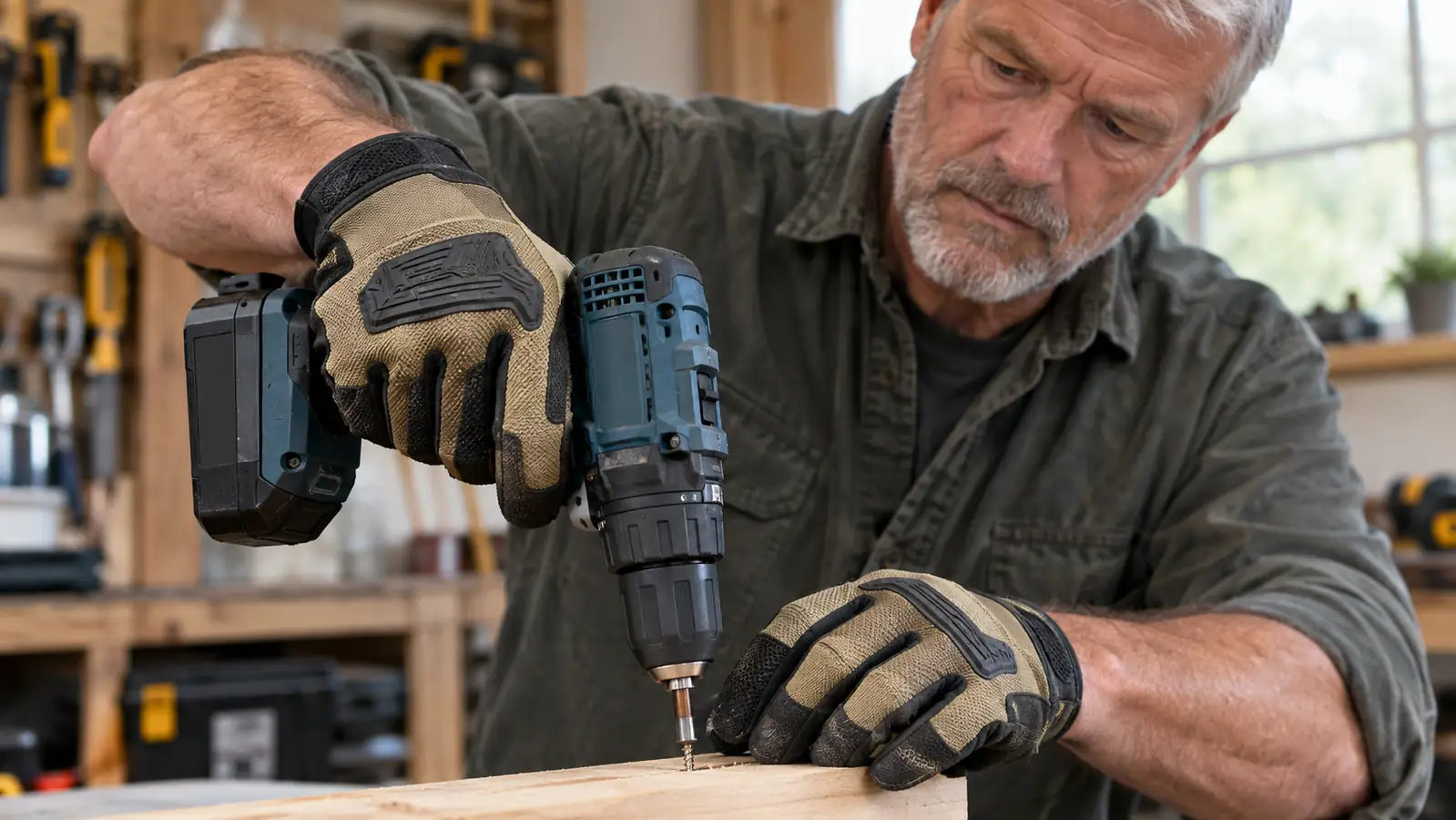
Two small things made a bigger difference than I expected. The first is buying a second pair and keeping it somewhere you'll actually find it. I keep one pair on the pegboard wall in my garage workshop and a second pair in the garden shed, because gloves disappear at the exact moment you need them. When you're halfway through a project at six o'clock on a Sunday, the right pair is worth more than the twenty minutes it takes to hunt one down.
One more thing: buy the touchscreen version even if you don't think you need it. I didn't think I needed it, and then I found myself taking my glove off to check a level app or look up a torque setting. The Mechanix Wear Original Touchscreen solves that, and it's the same model I'd recommend anyway. There's no reason to pick the version that makes you stop working.
The other thing I've learned is to size for the person you're buying for, not for the label. I've bought Mechanix Wear gloves as gifts for my grandkids, in sizes that actually fit their hands, and there's a real difference in how a kid approaches a project when the tool fits. A glove that flops off their fingers makes them frustrated and careless. A glove that fits makes them careful and proud. That's true for all of us, whatever our age.
The Short Version
If you're standing in the aisle right now, here's the plain-spoken version. Measure your palm, ignore anything that says 'one size fits most,' and buy a snug, dexterous glove in your actual size. For me, that's the Mechanix Wear Original Touchscreen Work Gloves, in a size that matches my hand, not the size that matches the peg. The listing I've linked here is a size Large, but the same model is sold in smaller sizes, so pick yours from the options on the page. If you're buying for someone else, measure their hand the same way, or just ask. The guess never fits. Your hands will thank you, and so will the tools you don't drop.
One last note about sizing down. If you're between sizes, and you will be, because every brand measures differently, go with the smaller one for work gloves. A glove stretches a little with use, and a glove that starts snug ends up perfect. A glove that starts loose only gets looser, and then you're back to bunching fabric and fingertips that hang past your own. When in doubt, size down.
Start With the Right Size, Not the Wrong Habit
The Mechanix Wear Original Touchscreen Work Gloves are the pair I reach for on every project. Measure your hand, then pick your size from the options on the listing.
Amazon Check Today's Price on Amazon →